
Berkeley Varitronics Octopus 4G LTE Cellular Signal Meter
4.5Editor score
Supports all U.S. carriers
True RSRP and RSSI measurements
No SIM cards or subscriptions needed
Finding the right cellular signal meter for antenna aiming ensures your booster installation reaches peak performance. Professional tools provide precise readings that prevent costly trial and error during setup.
We evaluated ten leading devices based on frequency coverage, accuracy, portability, and ease of use. Our list includes options for homeowners, installers, and enterprise networks.
Each pick highlights key specs, pros, and cons to match your specific needs. Prices fluctuate frequently, so verify current deals before purchasing your ideal measurement tool.
4.5Editor score

4.3Editor score

As an Amazon Associate we earn from qualifying purchases.
This side by side comparison highlights key specifications across ten top cellular signal meters for antenna aiming to help you choose the right tool.


The SureCall Five-Band RF Signal Meter is a dedicated tool for installing cell phone signal boosters. It rates 4.3 stars and is designed to measure signal strength across five key bands.
We may earn a commission when you buy through this link, at no additional cost to you.
Its standout quality is high receiving sensitivity at -110dBm. This allows installers to find the strongest signal source even in areas with poor reception, ensuring optimal antenna placement.
While it requires specific NiMH batteries, the rechargeable design offsets the cost over time. The controllable backlight ensures visibility in dark crawl spaces or attics where boosters are often mounted.
Installers should buy this for reliable, repeatable measurements. It is the top recommendation for anyone setting up a 4G LTE or AWS booster system.
This meter is specifically tuned for the frequencies used by signal boosters, avoiding false readings from unrelated radio signals.
With a 2.5 to 3.5 hour battery life, you can complete most installations on a single charge without carrying extra power.
We may earn a commission when you buy through this link, at no additional cost to you.
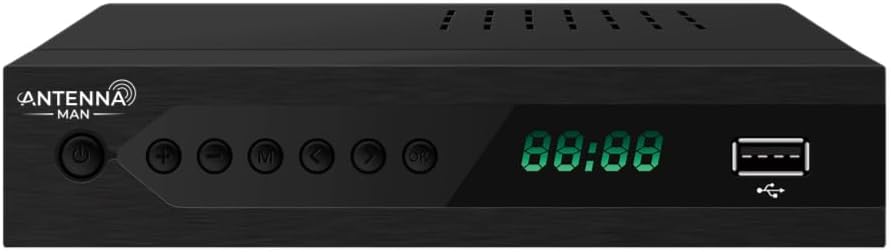
The Antenna Man Signal Meter serves as a budget-friendly option for checking signal strength. It rates 3.8 stars and is primarily designed for ATSC digital TV signals.
We may earn a commission when you buy through this link, at no additional cost to you.
Its key strength is real-time signal feedback. This allows users to adjust their antenna direction until they see the highest signal bars, improving reception quality.
However, it is not a true cellular signal meter. Its range is limited to TV broadcast frequencies, making it unsuitable for cell booster installation or Wi-Fi optimization.
Homeowners looking for a cheap way to align OTA antennas should consider this. It is not recommended for professional cellular work.
This device is built for simplicity, allowing users to plug it in and see results immediately without technical knowledge.
While it lacks advanced RF metrics, it provides the essential signal strength readings needed for basic antenna alignment.
We may earn a commission when you buy through this link, at no additional cost to you.
The Berkeley Varitronics Octopus 4G LTE Cellular Signal Meter is a top-tier tool for enterprise and IoT deployment. It holds a 4.5-star rating and offers professional-grade data.
We may earn a commission when you buy through this link, at no additional cost to you.
Its standout feature is true RSRP and RSRQ measurements. These are the precise metrics network engineers need to optimize signal quality for EV charging stations and wireless IoT.
Unlike phone apps, it requires no SIM cards. This ensures the readings reflect the actual RF environment rather than network-dependent software limitations.
Professionals requiring reliable, carrier-specific data should choose this device. It is the gold standard for critical infrastructure signal testing.
This tool supports all major U.S. regional carriers, ensuring consistent performance regardless of the network provider.
By not needing a SIM card, it avoids the fluctuations caused by phone firmware or carrier apps interfering with raw signal data.
We may earn a commission when you buy through this link, at no additional cost to you.
The RF Explorer Pro Spectrum Analyzer is a comprehensive RF measurement platform designed for engineers. It features a large HD touchscreen and supports up to 6.1GHz.
We may earn a commission when you buy through this link, at no additional cost to you.
Its key strength is the GPS Heatmap and advanced tools like waterfall views. These allow users to visualize signal propagation and interference in real time.
This tool is overkill for simple antenna aiming but unmatched for troubleshooting interference. It is designed for lab and field use by RF professionals.
RF engineers needing a full suite of tools should consider this. It offers the most versatility for complex spectrum analysis.
The large touchscreen allows for intuitive navigation through complex data, making spectrum analysis more accessible.
With built-in GPS heatmaps, you can physically map signal strength across large outdoor areas.
We may earn a commission when you buy through this link, at no additional cost to you.
The NetAlly AirCheck G3 Pro Kit is a premium solution for Wi-Fi network analysis. It rates 5 stars and includes advanced testing apps for critical services.
We may earn a commission when you buy through this link, at no additional cost to you.
Its strength lies in physical location detection. It helps find Wi-Fi access points and clients across 2.4, 5, and 6GHz bands quickly.
While excellent for wireless networks, it is not a cellular signal meter. The cost is very high, making it suitable for enterprise IT teams only.
Network engineers troubleshooting Wi-Fi should invest in this. It is not recommended for cellular antenna aiming.
This kit validates Wi-Fi performance for key devices, ensuring seamless connectivity in enterprise environments.
Remote collaboration features save time by allowing off-site engineers to assist on-site technicians.
We may earn a commission when you buy through this link, at no additional cost to you.
The Extech 480836 RF EMF Strength Meter measures high frequency electromagnetic fields. It rates 4.3 stars and is often used for safety and leak detection.
We may earn a commission when you buy through this link, at no additional cost to you.
Its key strength is the isotropic triaxial probe. This measures signals from all directions, providing a total field strength reading.
This tool is better for safety compliance than antenna aiming. It lacks the directional precision needed for optimizing cellular signals.
Safety inspectors needing general EMF readings should consider this. It is not the best choice for booster installation.
The triaxial probe ensures no signal direction is missed, giving a holistic view of the RF environment.
With memory for 99 sets, you can log readings at multiple points for detailed analysis.
We may earn a commission when you buy through this link, at no additional cost to you.
The MINI1300 Antenna Analyzer is a compact tool for measuring antenna performance. It rates 4.4 stars and covers a wide frequency range.
We may earn a commission when you buy through this link, at no additional cost to you.
Its key strength is SWR measurement. This helps tune antennas for resonance, which improves signal efficiency for radio transmitters.
While useful for tuning, it measures impedance rather than signal strength. It is best suited for ham radio enthusiasts.
Hobbyists tuning antennas should find this useful. It is not a replacement for a cellular signal strength meter.
Accurate SWR readings ensure your antenna is properly matched to the transmitter for maximum power transfer.
Time Domain Reflectometry helps locate cable faults, ensuring your feed lines are in good condition.
We may earn a commission when you buy through this link, at no additional cost to you.
The SA6 6GHz Portable Spectrum Analyzer is a versatile handheld tester. It covers a wide frequency range and includes a signal generator for testing.
We may earn a commission when you buy through this link, at no additional cost to you.
Its strength is versatility. It supports multiple wireless technologies including 2G, 3G, 4G, and Wi-Fi, making it adaptable for various tasks.
It is lightweight and easy to carry for field tests. The touchscreen offers real-time spectrum viewing for quick analysis.
Technicians needing a flexible tool should consider this. It provides a good balance of features for the price.
Switching instantly between spectrum analysis and signal generation allows for comprehensive component testing.
The color touchscreen and physical buttons ensure smooth operation even in challenging field environments.
We may earn a commission when you buy through this link, at no additional cost to you.
This handheld spectrum analyzer is a budget-friendly version of the SA6. It offers similar features for hobbyists and maintenance teams.
We may earn a commission when you buy through this link, at no additional cost to you.
Its strength is cost-effectiveness. You get access to real-time spectral measurement and a tracking generator without the high price tag.
Build quality is functional but basic. It works well for occasional field use and signal checks.
Budget-conscious technicians should consider this option. It is a practical entry point for RF analysis.
This tool lowers the barrier to entry for understanding wireless signal environments.
Included accessories like extension cables allow you to start analyzing immediately.
We may earn a commission when you buy through this link, at no additional cost to you.
The Channel Master TV Antenna Signal Strength Meter is specialized for Over-the-Air TV signals. It rates 3.9 stars and shows detailed signal metrics.
We may earn a commission when you buy through this link, at no additional cost to you.
Its strength is SNR display. Knowing the signal to noise ratio helps fine-tune antennas for the best picture quality without dropouts.
It is limited to TV bands and does not work for cellular signals. It is a dedicated tool for TV antenna installers.
Installers setting up TV antennas should use this. It provides precise feedback for alignment.
SNR data provides deeper insight into signal health than simple strength bars.
The included stylus and carrying bag ensure you are prepared for on-site work.
We may earn a commission when you buy through this link, at no additional cost to you.
Choosing the right meter depends on your target frequency and required accuracy.
Ensure the meter supports the specific bands you aim for. Cellular networks use 700MHz to 3.5GHz, while TV uses VHF and UHF.
Check if the device covers LTE, 5G, and 4G bands to ensure compatibility with current and future networks.
Look for meters that provide RSRP and RSSI values. These metrics indicate signal quality and strength more accurately than simple bars.
True metrics prevent guessing and ensure you select the best spot for your antenna.
Field work requires long battery life. Select a meter with rechargeable batteries that last at least 3 hours.
Carry spare batteries to avoid interruptions during critical alignment.
A bright, large screen is essential for reading in sunlight or dark attics. Touchscreens offer intuitive control.
Ensure backlighting is adjustable for varying environments.
Weight matters when hiking to rooftops. Select compact models under 2 lbs for easy transport.
Rugged designs survive drops in challenging outdoor work.
SIM-free meters measure raw RF signal. SIM-dependent apps may show network-dependent data.
Always choose tools that work without a SIM card for reliable signal testing.
Look for plug-and-play setups with clear displays. Avoid complex menus if you are not an RF engineer.
Simple interfaces reduce the risk of user error during alignment.
Consider tools with warranty and customer support. Professional grade devices come with better documentation.
Support is vital when troubleshooting complex installations.
Place your meter close to your antenna mount and power it on. Ensure it is fully charged and calibrated before starting.
Point your antenna towards the strongest signal direction and observe the meter. Slowly adjust the position to find the peak reading.
Keep the meter dry and free from dust. Store it in a protective case to prevent damage during transport.
Many advanced meters cover up to 6GHz which includes 5G bands. Check the frequency range to ensure support for your carrier's 5G signals.
Weak readings may indicate interference or obstruction. Check for nearby buildings or trees. Ensure your antenna is aligned properly.
No, TV meters operate on different frequencies. Using them for cellular signals will yield inaccurate results and fail to detect the correct band.
RSRP stands for Reference Signal Received Power. It is a critical metric for measuring signal strength in LTE and 5G networks accurately.
Most meters are pre-calibrated. Some professional models require calibration kits. Follow manufacturer instructions to ensure accurate readings.
Spectrum analyzers provide detailed frequency data. They are better for complex setups but cost more. Simple meters suffice for basic aiming.
Apps are convenient but often rely on SIM data. They may not show true RF strength. Dedicated meters are more reliable for installation.
Test after installation and during major weather changes. Regular testing ensures your system performs optimally over time.
Our top picks include the SureCall Five-Band Meter for boosters and the Berkeley Varitronics Octopus for enterprise needs.
Prioritize meters with true RSRP metrics and long battery life for reliable results.
Prices change regularly so check current deals to ensure you get the best value for your installation.