
Synido A10 Portable USB-C Audio Interface for Guitar & DJ Recording
4.4Editor score
Zero-latency monitoring
Portable aluminum alloy body
Continuous power via USB-C
This guide compares the top external sound cards for guitar to help you find the perfect interface for recording, streaming, and producing music in 2026.
Finding the right external sound card for guitar is essential for capturing your tone with clarity and precision. Whether you are a home studio enthusiast or a touring musician, the right interface ensures your instrument shines through any mix without unwanted noise or latency issues.
We evaluated ten top-rated audio interfaces based on their preamp quality, input options, software bundles, and overall value. Our analysis focuses on how well each unit handles instrument signals, supports modern connectivity standards like USB-C, and integrates with popular recording software for seamless workflows.
Each pick in this list highlights specific strengths for different user needs ranging from budget-friendly streaming setups to professional studio-grade recording. Keep in mind that availability and pricing may fluctuate, so checking the latest product details before purchasing is always recommended for the best deal.
4.4Editor score
4.6Editor score

Below is a detailed side-by-side comparison of all ten external sound cards for guitar featured in this guide. This table helps you quickly identify key specifications and features to determine which interface best suits your specific recording and performance needs.


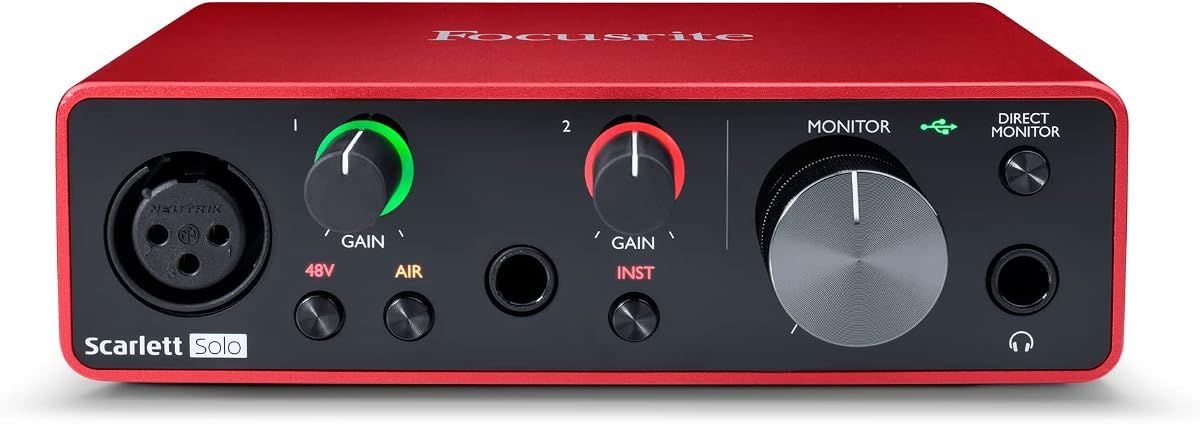
The Focusrite Scarlett Solo 3rd Gen USB-C Audio Interface stands out as a top choice for guitarists seeking professional sound quality at an accessible level. With a solid rating from users, it offers high-performance pre-amps and converters that capture every nuance of your playing without unwanted noise or distortion.
We may earn a commission when you buy through this link, at no additional cost to you.
This interface features a switchable Air mode that adds extra clarity to acoustic instruments, making it ideal for detailed recording sessions. The high-headroom instrument inputs ensure your guitar signals shine through without clipping, while Gain Halos provide visual feedback for perfect recording levels every time.
While the software bundle is extensive with tools like Ableton Live Lite and Cubase LE, some users might find they need to upgrade to paid versions for advanced features. Additionally, the output options are relatively basic compared to larger studio interfaces, though sufficient for most home recording setups.
If you are looking for a reliable interface that delivers pro-sounding recordings and includes essential tools to start right away, this model is an excellent investment. Its robust build and three-year warranty further confirm its suitability for both beginners and experienced musicians seeking quality.
The Air mode feature on this interface brightens the signal path to mimic classic tube preamps, giving your guitar and vocals a modern, polished top-end quality that cuts through mixes effectively.
Gain Halos ring the input knob in green or red to show you exactly when your signal is healthy or clipping, allowing you to set optimal recording levels instantly without relying solely on software meters.
We may earn a commission when you buy through this link, at no additional cost to you.
The Fender Quantum HD 2 is designed for serious musicians and producers who demand ultra-high-fidelity audio capture with professional clarity. As a 20×24 USB-C audio interface, it offers extensive I/O options and high-performance 32-bit/192 kHz converters that ensure pristine vocal and instrument recordings for any studio environment.
We may earn a commission when you buy through this link, at no additional cost to you.
This unit features MAX-HD mic preamps and front-facing instrument inputs optimized for transparent guitar and bass recording. The Auto Gain button simplifies setup by instantly setting perfect recording levels, while dual re-amp outputs let you explore new tones with external gear and pedals without signal degradation.
While the interface includes a perpetual license for Fender Studio Pro and access to authentic amp models, the high price point may be prohibitive for casual users. Additionally, the complexity of managing ADAT expansion and loopback routing might require a learning curve for those new to professional studio workflows.
For professionals seeking a robust solution with full remote control via Fender Studio Pro and hybrid studio growth potential through ADAT, this interface is a powerful choice. Its ability to streamline streaming and podcasting while delivering top-tier sound quality makes it worth the investment for dedicated creators.
Registering your interface unlocks the complete Fender Amp & FX Pack within the Fender Studio app, giving you instant access to a wide range of authentic amp models and effects to craft inspiring guitar tones.
The DSP monitor mixer and loopback routing capabilities allow you to seamlessly integrate backing tracks and computer audio into your streams or podcasts with zero latency monitoring for a professional broadcast experience.
We may earn a commission when you buy through this link, at no additional cost to you.
The M-AUDIO M-Track Duo is a versatile USB sound card that covers podcasting, recording, and live streaming needs with professional clarity. It delivers 48kHz audio resolution and features transparent Crystal Preamps that guarantee optimal sound from all microphones and instrument inputs making it suitable for various content creation tasks.
We may earn a commission when you buy through this link, at no additional cost to you.
This interface offers total monitoring flexibility with a USB/Direct switch for zero latency monitoring allowing you to hear your performance in real time. It includes essential production tools like MPC Beats Software and provides 1/4 outputs headphone output for convenient private listening during sessions.
While the Crystal Preamps ensure clean audio capture, some users might find the included software limited compared to industry standards. The headphone output is functional but lacks advanced volume control features found in more premium interfaces which may affect private listening experiences.
Ideal for creators needing a fuss-free interface to record guitar vocals or line inputs signals the M-Track Duo provides excellent value. Its ability to handle condenser mics with phantom power and deliver stable performance makes it a strong contender for home studios and streamers alike.
With two combo XLR Line and Instrument Inputs you can easily switch between connecting microphones and guitars without needing extra adapters or breakout boxes saving time and effort during setup.
The inclusion of MPC Beats Software gives you immediate access to production tools from Akai Professional helping you jumpstart your music creation process with built-in samples and loops right out of the box.
We may earn a commission when you buy through this link, at no additional cost to you.
The Fender AudioBox GO is an ultra-compact 2×2 USB-C audio interface designed for guitarists and producers on the go. It features pristine 24-bit/96 kHz converters for music and mobile recording along with a dedicated TS instrument input optimized for high-quality guitar and bass capture.
We may earn a commission when you buy through this link, at no additional cost to you.
This interface offers zero-latency headphone monitoring with a mix control for real-time tracking ensuring you hear your performance clearly without delay. The bus-powered design eliminates the need for external power making it effortless to plug and play with virtually all macOS and Windows systems.
While it includes a six-month trial of Fender Studio Pro the limited trial period may require upgrades sooner than expected for serious creators. The two balanced main outputs are sufficient but do not offer the expansion capabilities of larger interfaces which limits advanced studio setups.
If you prioritize portability and ease of use for podcasts and mobile recording the AudioBox GO delivers a seamless experience. Its compatibility with major audio apps and access to authentic Fender amp models via the Fender Studio app adds significant value for guitarists.
Unlock the complete Fender Amp & FX Pack in the Fender Studio app to access a full collection of authentic amp models and effects that help you craft inspiring guitar and bass tones effortlessly.
The mix control allows you to adjust the balance between your direct instrument signal and playback audio ensuring you hear exactly what you need for perfect timing while recording.
We may earn a commission when you buy through this link, at no additional cost to you.
The MAONO PS22 Lite is designed for recording enthusiasts and streamers needing high-resolution audio at an accessible price point. It ensures clear and realistic sound with 24-bit/192kHz recording and a dynamic range of 106dB making it suitable for capturing detailed guitar and vocal performances.
We may earn a commission when you buy through this link, at no additional cost to you.
This interface features intuitive modes for recording and live broadcast including ProStudio Routing Software for additional virtual channels and loopbacks. The ergonomic design includes a dynamic light ring indicating sound input status and side headphone monitoring to reduce cable clutter for a better user experience.
While the dynamic light ring and compact size make it user-friendly beginners may need to configure ASIO drivers correctly within their DAW settings. It lacks dedicated re-amp outputs which limits exploration of external gear but remains ideal for basic streaming and home recording setups.
For content creators and beginners seeking a versatile and easy-to-use interface the PS22 Lite offers excellent value. Its compatibility with Mac Windows and iPads plus a plug-and-play function ensures you can start creating music and content with minimal setup time.
The dynamic light ring on the interface provides immediate visual cues about your audio signal status helping you ensure your levels are correct without needing to constantly check software meters.
Live streamers can take control of their broadcasts with the included ProStudio Routing Software which offers flexibility for managing virtual channels and loopbacks compatible with popular DAWs.
We may earn a commission when you buy through this link, at no additional cost to you.
The Sound Blaster Play! 3 is a compact USB audio adapter that enhances your computer's audio capabilities for playback and listening. It supports 24-bit 96kHz audio and works straight out of the box without requiring any driver installations making it easy to use for immediate playback needs.
We may earn a commission when you buy through this link, at no additional cost to you.
This adapter is compatible with all analog headsets including standard mobile phone earbuds and studio-grade headphones. The downloadable software gives powerful audio enhancements and optimized profiles for multiple earphone brands ensuring a tailored listening experience for various headphone types.
While it improves playback quality significantly it is not designed for recording instruments or microphones which limits its use for guitarists needing input capabilities. The audio enhancements are helpful but basic compared to specialized interfaces which may not suit professional production needs.
If you simply need to improve your PC's audio output for listening to music or watching videos this adapter is a practical and affordable solution. Its plug-and-play nature ensures compatibility with any USB port without additional setup or software downloads.
The control panel software provides optimized profiles for multiple earphone brands helping you get the best sound quality from your specific headphones without needing to manually adjust equalizer settings.
Connect your headsets with single or split stereo/mic connectors easily without needing a Y-splitter cable which simplifies setup and reduces the risk of connection errors.
We may earn a commission when you buy through this link, at no additional cost to you.
The StarTech 7.1 USB Audio Adapter adds up to 7.1 channels of audio through a single USB port to your computer making it ideal for immersive sound experiences. It supports 7.1 5.1 and 2 channel output using 3.5mm jacks a headphone port line-in and stereo microphone inputs for versatile connectivity.
We may earn a commission when you buy through this link, at no additional cost to you.
This external sound card upgrades existing integrated audio on desktop or laptop computers with support for analog and digital audio output. The digital audio adapter includes volume controls and mute buttons for easy management of audio levels during gaming or multimedia consumption.
While it supports 44.1KHz and 48KHz sampling rates for analog playback and recording these rates are limited compared to high-resolution standards found in professional interfaces. The audio quality is adequate for general use but may not satisfy demanding recording needs for musical instruments.
If you are looking to add surround sound capabilities to your PC setup this adapter provides a straightforward upgrade path. Its ease of installation and included 1m USB cable ensure you can start enjoying enhanced audio quickly without technical hurdles.
With support for 7.1 channel audio applications this sound card transforms your listening experience by providing rich surround sound for movies and games beyond standard stereo output.
The external sound card features easy-to-use volume controls and mute buttons allowing you to manage audio levels quickly without having to access system settings every time.
We may earn a commission when you buy through this link, at no additional cost to you.
The Synido A10 Portable USB-C Audio Interface is built for the modern musician needing reliable recording capabilities on the go. It delivers pristine 24-bit/48kHz resolution and features an advanced dual-core chip to ensure zero-latency monitoring for guitars bass keyboards and electronic drums.
We may earn a commission when you buy through this link, at no additional cost to you.
Designed with a sturdy aluminum alloy body this compact interface includes a secure buckle-design USB-C connector to maintain a stable connection during critical sessions. It supports wireless backing track playback from one phone to another which helps focus entirely on your performance without cables.
While the hardware is durable and portable the interface lacks phantom power for condenser microphones which limits vocal recording options. The included software support is basic compared to industry leaders but sufficient for straightforward recording and practice needs.
For musicians prioritizing portability and zero-latency monitoring in a compact form factor the A10 offers excellent performance. Its ability to record while charging your device ensures uninterrupted sessions making it ideal for long practice or recording periods.
Elevate your creativity with exclusive wireless accompaniment playback streaming backing tracks directly from one phone to the recording phone so you can focus on performance without cables.
Two independent volume buttons allow you to precisely balance your input signal and headphone monitoring levels ensuring you hear exactly what you need for accurate recording.
We may earn a commission when you buy through this link, at no additional cost to you.
The Cubilux CB5 USB Audio Interface converts a USB port into a versatile hub for microphones instruments and headphones with 5-In-1 connectivity. It captures crisp and precise sound with up to 96 KHz/24-bit resolution making it suitable for professional audio content and podcasting needs.
We may earn a commission when you buy through this link, at no additional cost to you.
This interface is integrated with a powerful Hi-Res DAC to fully drive studio monitors up to 250 Ohm delivering clean sound without external power. The compact design allows for on-the-go recording so you can capture inspiration wherever it strikes with ease.
While the Hi-Res DAC offers excellent audio clarity the line-out jack and audio output jack cannot be used simultaneously which limits connection flexibility. The simple build may not offer the durability needed for rough touring environments but works well for home studios.
If you need a portable and easy-to-use interface for streaming and podcasting this model provides solid value. Its ability to record multi-track audio by assigning independent device names enhances production capabilities for content creators.
By assigning independent device names to each interface the Cubilux CB5 makes it easy to record multi-track audio allowing more complex projects without needing advanced hardware.
The integrated Hi-Res DAC can fully drive studio monitors up to 250 Ohm ensuring you get clean and pristine sound quality from your speakers during mixing sessions.
We may earn a commission when you buy through this link, at no additional cost to you.
The Cubilux 7.1 USB Surround Sound Card offers a rich audio experience with 7.1 and 5.1 USB surround sound perfect for gaming and movies. It supports headphone output sampling rates from 44.1Khz/16-bit to 384Khz/24-bit letting you enjoy Hi-Res music on popular streaming platforms.
We may earn a commission when you buy through this link, at no additional cost to you.
This external sound card features a full aluminum alloy case that enables full isolation of electronic interference ensuring no-loss transmission of audio signals without static or ground noise. It works seamlessly with PCs and MacBooks that lack a built-in 7.1 sound card for enhanced playback.
While the aluminum case ensures durability and clean transmission this device is primarily designed for audio output and not for recording instruments. Users should note it does not support Windows XP or Windows 7 which may limit compatibility for older systems.
For those seeking an affordable way to enhance their audio experience for multimedia consumption this sound card delivers strong performance. Its plug and play functionality ensures compatibility with PCs without needing external power or complicated driver installations.
The headphones output supports sampling rates up to 384Khz/24-bit allowing you to fully enjoy Hi-Res music tracks from Spotify and other streaming services without quality loss.
The aluminum alloy housing ensures full isolation of electronic interference providing clean audio signals without static or ground noise during playback.
We may earn a commission when you buy through this link, at no additional cost to you.
Selecting the right external sound card for guitar involves considering various technical and practical factors to ensure your instrument sounds its best. This guide outlines the key aspects to evaluate when choosing an interface for your specific recording and performance needs.
The quality of the instrument input and preamps is critical for capturing a clean and accurate guitar tone. Look for interfaces with high-headroom inputs that prevent clipping even when playing loudly and preamps that add warmth without unwanted noise.
Ensure the interface offers transparent amplification so your guitar's natural tone remains intact during recording and that the input impedance matches your instrument to avoid signal loss.
Higher resolution and sample rates such as 24-bit/96kHz or 24-bit/192kHz provide more detailed audio capture and better dynamic range. These specifications are important for professional quality recordings where subtle nuances in your playing matter.
Check the interface supports sampling rates that align with your recording software and production goals to ensure compatibility and optimal audio quality without unnecessary file bloat.
Low latency is essential for real-time monitoring so you can hear your guitar instantly without delay that disrupts your timing. Interfaces with direct monitoring features allow you to hear your input signal directly without computer processing.
Zero-latency monitoring ensures you can record confidently and perform live without distraction by selecting a unit with a dedicated monitoring switch or hardware mix control.
Modern interfaces should offer USB-C connectivity for faster data transfer and better compatibility with current computers and mobile devices. Check for sufficient ports including instrument inputs headphone outputs and line outputs to fit your gear.
Consider if the interface supports additional I/O like ADAT or S/PDIF for future expansion needs and ensure the cable included matches your computer's ports for plug-and-play convenience.
Quality interfaces often include valuable software bundles such as DAWs amp simulators or effects plugins that save money on additional purchases. Ensure the included drivers are stable and compatible with your operating system to avoid technical issues.
Look for interfaces that support ASIO drivers for low-latency performance on Windows and have robust Mac compatibility so you can integrate seamlessly with your existing studio software.
A sturdy build with materials like aluminum alloy ensures durability especially if you plan to transport the interface for gigs or travel. Compact designs with secure connectors help prevent accidental disconnections during critical recording sessions.
Evaluate the weight and size to ensure it fits your workspace comfortably and check if it is bus-powered to avoid needing an external power adapter for portable setups.
If you plan to record vocals alongside guitar ensure the interface offers 48V phantom power for condenser microphones which require external power to function correctly. Combo inputs that accept both XLR and TS cables add versatility to your setup.
Confirm the phantom power switch is easily accessible and independent so you can toggle it safely without disrupting your instrument signals during recording.
A solid warranty and accessible customer support provide peace of mind that your investment is protected against manufacturing faults. Longer warranty periods indicate confidence in product quality and can save money on repairs or replacements.
Check the manufacturer's reputation for reliability and support response times to ensure you receive timely help if you encounter technical issues with the interface.
Connect the interface to your computer using the provided USB cable and install any necessary drivers or software before connecting your guitar. Power on the interface and adjust the gain knob while playing your instrument to set optimal recording levels indicated by green lights.
Plug your headphones into the headphone jack and enable direct monitoring if available to hear your performance in real time without latency. Use the software provided to configure your audio settings and assign input sources for recording tracks in your DAW.
Store the interface in a dry and dust-free environment when not in use to prevent damage to connectors and electronic components. Avoid exposing the unit to extreme temperatures or moisture which can degrade the aluminum body and internal circuitry over time.
Most modern interfaces are plug-and-play but some benefit from installing dedicated ASIO drivers for lower latency on Windows. macOS users often find drivers already supported but checking the manufacturer's website for updates is recommended for best performance.
Yes if the interface has multiple inputs including instrument and XLR mic inputs. Ensure your software is configured to record both channels simultaneously and set levels so neither input overloads the preamps during your session.
USB-C offers faster data transfer speeds and reverse compatibility with newer devices compared to standard USB. Many newer interfaces use USB-C for better connectivity but may include adapters for older USB ports if needed.
Not necessarily as many interfaces come with software amp simulators that model real amps and effects. You can plug your guitar directly into the interface for recording or use headphones to monitor your tone without a physical amp.
Use shielded instrument cables and ensure all connections are tight to minimize interference. Keep your interface away from power supplies or use a USB hub with isolation to reduce ground loop noise during recording sessions.
Many interfaces with USB-C support work with iPads and phones using appropriate adapters for OTG connectivity. Check product specifications for mobile compatibility and ensure your recording software supports iOS or Android versions.
This guide has highlighted ten exceptional external sound cards for guitar ranging from professional studio-grade interfaces to portable budget-friendly options. Each pick offers distinct strengths in preamp quality connectivity and software support to help you find the ideal match for your musical needs.
Prioritize factors like input quality latency and software integration based on your primary use case whether that is live performance studio recording or content streaming. Balancing these features with your budget will ensure you get the most value and performance from your investment.
Remember that product availability and pricing may change over time so verifying current details before purchasing is always a good practice. Explore the links provided to learn more and find the perfect external sound card to elevate your guitar recordings today.