
2.4G Wireless Saxophone Microphone System, Clip-On Instrument Microphone for Brass
3.6Editor score
2.4G wireless low latency
15-hour battery life
360-degree adjustable gooseneck
This guide compares the top 10 clip on saxophone microphones for 2026, evaluating wireless range, sound quality, and ease of use for musicians.
Musicians seeking high-quality amplification often turn to clip on saxophone microphones for their versatility and ease of use. These devices attach directly to your instrument, capturing rich tones while allowing freedom of movement on stage or in the studio. Choosing the right model depends on your specific needs, whether you prioritize wireless range, sound fidelity, or budget constraints.
We have carefully evaluated ten leading models to provide a comprehensive comparison of the best options available today. Our analysis focuses on critical factors such as transmission stability, battery life, build quality, and overall audio performance. By examining real-world usage scenarios, we aim to help you find the perfect microphone system for your saxophone or brass instrument.
Each product review highlights key specifications, pros, and cons to give you a clear understanding of what to expect. We include detailed insights into setup processes, compatibility with various instruments, and durability over time. Please note that prices and availability may change, so verify current details before making your final purchase decision.
3.6Editor score

4.7Editor score
4.6Editor score
The following table provides a side-by-side comparison of all ten products reviewed in this guide, highlighting their unique features, ratings, and key specifications to help you make an informed choice.




This budget-friendly wireless system is designed for musicians who need reliable sound without breaking the bank. With a solid rating, it offers a 2.4G connection that minimizes latency for natural sound during live performances or practice sessions.
We may earn a commission when you buy through this link, at no additional cost to you.
The standout feature is its impressive 15-hour battery life, which is rare for systems in this price range. It also supports auto-pairing, making it incredibly easy for students and teachers to set up quickly. The 360-degree adjustable gooseneck ensures you can position the mic precisely for optimal sound pickup.
While it performs well for small gigs and teaching, its range might be limited compared to more expensive UHF systems. Additionally, the overall rating suggests some users may have encountered connectivity issues in crowded environments. However, for casual use and budget-conscious buyers, it remains a strong contender.
If you are a student or teacher looking for an affordable solution for classroom use or small performances, this microphone system is worth considering. Its ease of use and long battery life make it a practical choice for daily practice and rehearsals.
The auto-pairing feature and long battery life make this system perfect for educators who need reliable equipment for daily use.
Designed for saxophones and brass, it also works well with flutes and other acoustic instruments for multi-instrumentalists.
We may earn a commission when you buy through this link, at no additional cost to you.
The SGPRO TR15 is a robust wireless system designed for musicians who need to move freely on stage. Its UHF technology ensures a stable signal up to 196 feet, allowing you to engage with your audience without worrying about signal dropouts.
We may earn a commission when you buy through this link, at no additional cost to you.
One of its key strengths is the specially designed clip with virgin rubber padding, which protects your instrument from damage. The LCD indicators provide crucial information like battery life and signal strength, helping you stay informed during performances. It works well for various brass instruments beyond just saxophones.
However, potential buyers should note that the gooseneck mic version may vary depending on the region, which could be confusing. Additionally, the package does not include a charging adapter, so you'll need a separate Type-C adapter. Despite these minor issues, it offers great value for its features.
For performers who prioritize range and instrument safety, the SGPRO TR15 is an excellent choice. Its comprehensive feature set and reliable transmission make it suitable for both professional gigs and serious practice sessions.
The virgin rubber padding on the clip ensures a firm hold without scratching or damaging your saxophone's finish.
View vital stats like volume, signal strength, and battery life directly on the receiver during your performance.
We may earn a commission when you buy through this link, at no additional cost to you.
The Audio-Technica PRO 35 stands out as a top choice for musicians seeking professional sound quality. With an impressive 4.7 rating, this wired condenser microphone is renowned for its clarity and reliability in demanding performance environments.
We may earn a commission when you buy through this link, at no additional cost to you.
Its cardioid polar pattern effectively reduces pickup from the sides and rear, ensuring that only your instrument is amplified. The UniMount clip is designed to secure the mic while protecting it from shock, making it durable for regular use. The extended frequency response captures even the subtlest nuances of your playing.
The main trade-off is that it is a wired microphone, which limits your movement on stage compared to wireless options. Additionally, it comes at a higher price point, which might be a consideration for casual players. However, for studio work or controlled live settings, the sound quality is unmatched.
If you prioritize audio fidelity and durability over wireless convenience, the Audio-Technica PRO 35 is the best pick. It is an investment that pays off in professional sound reproduction and long-term reliability for serious musicians.
The cardioid pattern minimizes ambient noise, focusing exclusively on your instrument for a clean, crisp sound.
The UniMount clip provides shock resistance, protecting the microphone element from damage during transport or play.
We may earn a commission when you buy through this link, at no additional cost to you.
This wireless system is engineered for musicians who need extended range and high-quality audio. With a UHF transmission distance of up to 260 feet, it allows for significant movement on stage while maintaining a stable connection.
We may earn a commission when you buy through this link, at no additional cost to you.
The detachable design separates the mic from the transmitter, reducing burden on your instrument and improving comfort during long performances. It includes a Shure-compatible XLR adapter, making it versatile for various audio setups. The 32 built-in channels support simultaneous use of multiple sets, ideal for orchestras.
While the range and features are impressive, the price is on the higher end, and the receiver can be somewhat bulky. These factors might make it less ideal for solo performers on a tight budget. However, for group settings or large venues, the performance justifies the cost.
If you need a system that can handle complex environments and multiple performers, this model is a strong candidate. Its combination of range, compatibility, and design makes it a professional-grade tool for serious musicians.
Separating the mic from the transmitter keeps your saxophone light and ensures a natural playing posture.
With 32 channels, you can run multiple systems simultaneously without interference, perfect for large ensembles.
We may earn a commission when you buy through this link, at no additional cost to you.
This system offers a great balance of performance and affordability, as reflected in its high 4.6 rating. It uses UHF technology to provide a stable 164-foot range, giving you freedom to move without worrying about cables or dropouts.
We may earn a commission when you buy through this link, at no additional cost to you.
The plug-and-play simplicity means you can start playing in seconds without complicated software or drivers. The universal clip design fits securely on various wind instruments, ensuring optimal pickup without affecting playability. The compact transmitter is discreet and lightweight, making it comfortable for long sessions.
While it lacks some advanced features like LCD screens or adjustable channels, its reliability and ease of use make it a strong contender. The range is good for most small to medium venues, though larger spaces might require a more powerful system. Overall, it delivers excellent value.
For musicians who want a reliable, hassle-free wireless system without breaking the bank, this is an ideal choice. It is particularly well-suited for church services, rehearsals, and small gigs where simplicity is key.
The plug-and-play design eliminates the need for drivers or software, allowing you to focus on your performance.
Whether you play sax, trumpet, or trombone, the adjustable gooseneck ensures a secure fit and optimal sound pickup.
We may earn a commission when you buy through this link, at no additional cost to you.
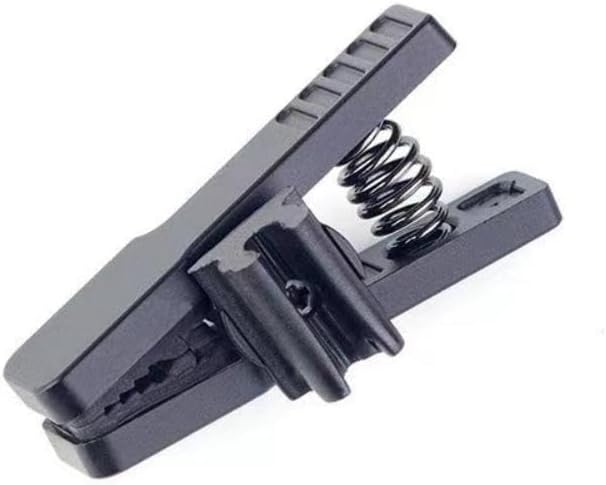
This product is a dedicated clip accessory designed to securely attach microphones to saxophones and other instruments. With a solid 4.5 rating, it offers a reliable solution for musicians looking to stabilize their mic setup without extensive modifications.
We may earn a commission when you buy through this link, at no additional cost to you.
Its primary function is to provide a firm grip for microphones, ensuring they stay in place during performances. The design is specific to saxophones, making it easy to install and remove as needed. It is a cost-effective way to enhance your current microphone setup.
However, it is important to note that this is an accessory, not a complete microphone system. You will still need a microphone and audio equipment to use it effectively. Additionally, its compatibility is limited to specific instruments, so check your setup before purchasing.
If you need a reliable clip to mount your existing microphone on a saxophone, this is a practical addition to your gear. It improves stability and ease of use without adding significant cost or bulk to your instrument.
The sturdy design ensures your microphone remains fixed in the optimal position during even the most energetic performances.
Instead of buying a new system, this clip upgrades your current setup, making it a budget-friendly accessory.
We may earn a commission when you buy through this link, at no additional cost to you.
This versatile wireless system is compatible with a wide range of instruments, including saxophones, trumpets, and even cellos. It uses UHF transmission to deliver stable, interference-free sound for various performance settings.
We may earn a commission when you buy through this link, at no additional cost to you.
The rotatable silicone clip allows for flexible positioning, ensuring you can capture the best sound from your instrument. It features high-sensitivity pickup, which effectively captures the soundtrack of your playing. The package includes a protective case for convenient storage and transport.
The main limitation is the battery life, which provides about 4 hours of use. This might be insufficient for long sessions or all-day events without recharging. Additionally, the control interface is basic compared to more advanced models. Despite this, the 2-year warranty adds value.
For musicians who play multiple instruments or need a versatile solution for different gigs, this system is worth considering. Its flexibility and warranty make it a practical choice for those who value reliability and adaptability.
Designed for everything from saxophones to cellos, it adapts to various instruments, making it a flexible choice.
Adjust the mic angle freely to capture the perfect sound without being restricted by a fixed position.
We may earn a commission when you buy through this link, at no additional cost to you.
The YXG system is tailored for solo performers who want a compact, feature-rich wireless solution. With a 100-foot range and 8-hour battery life, it provides reliable performance for most intimate venues or rehearsals.
We may earn a commission when you buy through this link, at no additional cost to you.
One of its unique features is the inclusion of preset EQ and Echo levels, which helps enhance your sound without external processors. The gooseneck is made from first-class bronze material, ensuring stability without annoying rebound when adjusted. It is lightweight and compact, making it easy to carry.
The limited range might be a drawback for larger stages or outdoor settings where distance is key. Additionally, the controls are relatively basic compared to high-end models. However, for its price point, it offers a surprising amount of functionality and convenience.
If you are a solo artist or need a portable system for small gigs, this model is an excellent fit. The built-in sound effects and long battery life make it a convenient choice for performers who value ease of use.
Preset EQ and Echo levels allow you to enhance your tone without needing external audio processors or mixing boards.
The high-quality bronze material ensures the mic stays in position without bouncing back, providing precise adjustment.
We may earn a commission when you buy through this link, at no additional cost to you.
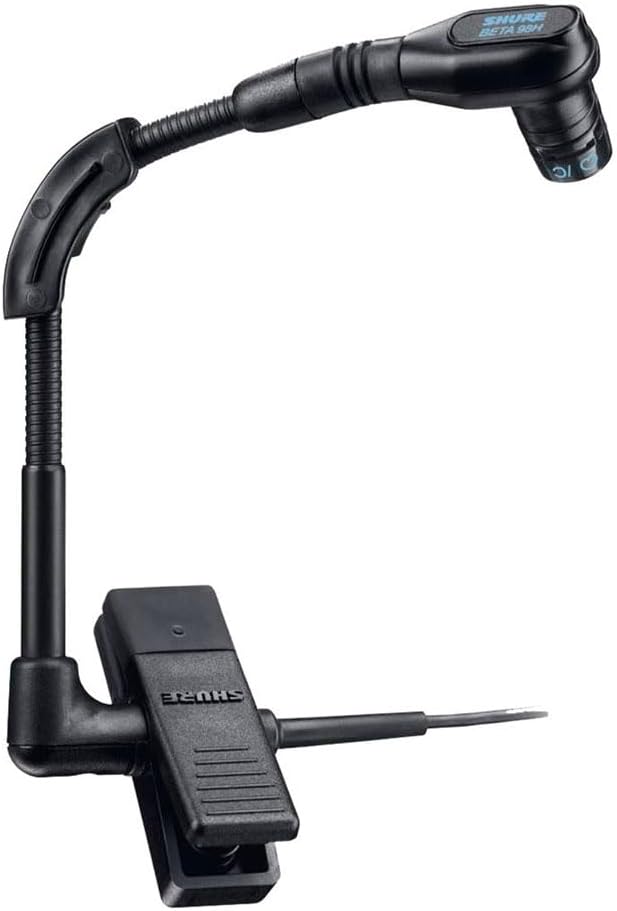
The Shure BETA 98H/C is the ultimate choice for professional musicians who demand the highest sound quality. Its 4.6 rating reflects its reputation for reliability, durability, and exceptional audio performance in rigorous environments.
We may earn a commission when you buy through this link, at no additional cost to you.
Designed to handle extreme sound pressure levels, it is perfect for brass and woodwind instruments that produce powerful tones. The tailored frequency response ensures a natural, open sound reproduction, while the cardioid pattern rejects unwanted noise. The transformerless preamplifier improves linearity across the full frequency range.
As a wired microphone, it does not offer wireless freedom, which limits movement on stage. The higher price point also makes it an investment for serious professionals rather than casual players. However, the sound quality and durability are unmatched in its class.
If you are a professional musician who prioritizes audio fidelity and reliability above all else, this is the premium choice. It is an essential tool for those who need a microphone that can handle the demands of touring and professional recording.
With a high maximum sound pressure level, it can handle the loudest brass instruments without distortion or clipping.
The cardioid pattern provides high gain-before-feedback, ensuring your instrument is heard clearly without unwanted ambient noise.
We may earn a commission when you buy through this link, at no additional cost to you.
This system offers a broad range of features designed to provide flexibility for various performance environments. With 200 adjustable UHF channels, it can handle complex wireless environments by selecting interference-free frequencies easily.
We may earn a commission when you buy through this link, at no additional cost to you.
The LED digital screen provides easy visibility of frequency, battery power, and volume settings. The anti-slip clip ensures the mic stays securely on your instrument without damage, while the flexible gooseneck allows for precise adjustment. It includes a portable storage case for convenience.
While the range and channel flexibility are strong points, the overall rating is average, suggesting some users may have experienced issues with build quality or sound consistency. The battery life is decent but not class-leading. However, it offers a solid balance of features for its price.
For musicians who need a system with wide channel flexibility and digital monitoring, this is a viable option. It is particularly suitable for performances in crowded wireless environments where channel selection is critical.
The 200 adjustable channels and LED screen help you avoid interference in complex environments with ease.
Includes a storage case for safe transport, making it easy to take your system to gigs and rehearsals.
We may earn a commission when you buy through this link, at no additional cost to you.
Selecting the right clip on saxophone microphone involves considering several key factors to ensure it meets your performance needs and budget. This guide breaks down the essential elements to help you make an informed decision.
Wireless systems offer freedom of movement, making them ideal for live performances where you need to engage with the audience. They use UHF or 2.4G technology to transmit audio without cables, though they tend to be more expensive and require battery management. Wired microphones, on the other hand, provide consistent sound quality without the worry of signal dropouts or battery life, making them preferable for studio work or controlled environments.
Choose wireless if you value mobility and perform live, while wired is better for reliability and sound fidelity in fixed settings.
Transmission range refers to the maximum distance the microphone signal can travel without interference. Wireless models typically offer ranges from 100 feet to over 200 feet. For small gigs or rehearsals, a shorter range may suffice, but larger stages require longer ranges to prevent signal loss. Always consider your typical performance environment when evaluating this spec.
Ensure the range matches your stage size to avoid audio dropouts during critical moments of your performance.
Battery life is critical for wireless microphones, as running out of power mid-performance can be disastrous. Look for systems with at least 4 to 6 hours of use, though some models offer up to 15 hours. Rechargeable batteries are preferable to disposable ones for convenience and cost savings. Also, check if the system allows charging while in use to avoid downtime.
Prioritize models with longer battery life if you perform for extended periods without frequent breaks.
The clip mechanism must securely hold the microphone without damaging your instrument. Look for designs with rubber padding or shock absorbers to protect the saxophone's finish. Additionally, ensure the clip is compatible with your specific instrument size and type, as some are tailored for brass while others are for woodwinds. Adjustable goosenecks add flexibility for positioning.
Choose a clip that is secure, protective, and compatible with your saxophone to prevent damage and ensure stable audio.
Sound quality is paramount, so look for microphones with wide frequency responses that capture the nuances of your playing. Condenser mics generally offer higher sensitivity and clarity than dynamic ones. Features like high maximum sound pressure level (SPL) ensure the mic can handle loud instruments without distortion. Check reviews for real-world audio performance before buying.
Invest in a microphone with a high-quality condenser element and wide frequency response for the best audio fidelity.
For many musicians, quick and easy setup is essential to avoid technical issues before a performance. Plug-and-play systems with auto-pairing simplify the process, allowing you to start playing in seconds. Digital screens and intuitive controls help monitor status like battery and volume easily. Avoid systems that require complex software or manual frequency tuning if possible.
Opt for user-friendly systems with auto-pairing and clear indicators to minimize setup time and frustration.
Build quality affects how well the microphone withstands the rigors of travel and regular use. Look for sturdy materials like metal goosenecks and reinforced clips. Check if the brand offers a warranty, as this indicates confidence in the product's longevity. Avoid lightweight, plastic-heavy models if you plan to tour or travel frequently with your equipment.
Select models with durable materials and a warranty to ensure your investment lasts through years of performance.
Prices vary significantly, from under $50 to over $200. Determine your budget early to narrow down options without overspending. While cheaper models may offer good value, they might lack features like long battery life or wide range. Consider the long-term value of a higher-priced model if you plan to use it professionally, as it may save money on replacements.
Balance cost with features that matter most to you, ensuring you get the best value for your specific performance needs.
Proper attachment is the first step to ensuring good sound quality and protecting your instrument. Position the clip on a sturdy part of the saxophone, such as the neck or body, avoiding painted areas that might scratch. Use the rubber padding or shock absorber to secure the mic firmly without overtightening.
For wireless systems, fully charge the batteries before your first use and monitor them during performance to avoid sudden power loss. Pair the transmitter and receiver by turning them on simultaneously, and check the LED indicators to confirm a stable connection. Adjust the volume levels to match your amplifier or sound system.
After use, store your microphone in the provided case to protect it from dust and damage. Clean the clip and gooseneck regularly with a soft cloth to remove dust and moisture. Avoid exposing the microphone to extreme temperatures or humidity, as this can damage electronic components over time.
Most modern clip on microphones are designed to be versatile and compatible with soprano, alto, tenor, and baritone saxophones. However, some models may be optimized for specific sizes, so it is best to check the product specifications. Additionally, many systems work with other brass instruments like trumpets and trombones for broader utility.
Feedback occurs when the mic picks up sound from the speakers, creating a loop. To prevent this, position the microphone away from speakers and ensure the volume is set appropriately for your environment. Using a cardioid polar pattern can also help by focusing pickup on the instrument and rejecting sound from other directions.
Yes, clip on microphones are often used for studio recordings, especially when isolation is needed. Wired condenser models like the Audio-Technica PRO 35 are particularly popular for studio work due to their high fidelity. Just ensure your audio interface is properly set up to capture the clean signal from the microphone.
UHF (Ultra High Frequency) typically offers better range and resistance to interference in crowded environments, making it ideal for professional live performances. 2.4G is more common in consumer electronics and offers low latency but might be more prone to interference from Wi-Fi signals. Choose UHF for reliability in large venues.
Rechargeable batteries should be recharged regularly based on your usage, typically after every few hours of play. If using disposable batteries, replace them as soon as the performance drops or when the LED indicates low power. To prolong battery life, turn off the transmitter when not in use and avoid overcharging.
It is generally safe to leave the clip on for short periods, but long-term attachment may cause wear on the instrument's finish or mechanism. It is best to remove the clip after each session to protect your saxophone and ensure the clip does not lose its tension or grip over time.
Choosing the right clip on saxophone microphone depends on your specific performance needs, whether you prioritize wireless freedom or wired reliability. Our top picks include the Audio-Technica PRO 35 for professional sound, the SGPRO TR15 for range, and the 2.4G system for budget-friendly versatility.
When making your decision, consider factors like battery life, range, and ease of use alongside your budget. A high-quality microphone not only enhances your sound but also protects your instrument and boosts your confidence on stage. Don't overlook the importance of a secure clip and intuitive controls for a seamless experience.
Prices and availability can change rapidly, so always verify the latest details before purchasing. We hope this guide has provided you with the insights needed to find the perfect microphone system. Happy playing, and may your performances sound their best with the right equipment.