
10 Pack 3 Pins AMS1117-3.3
4.1Editor score
Supports 4.75V to 12V input
Provides fixed 3.3V output voltage
Delivers up to 0.8A current output
This expert guide compares the top 5V to 3V voltage regulator modules available in October 2026 based on efficiency, current output, size, and reliability for
Selecting the right voltage regulator is crucial for powering sensitive electronics like microcontrollers and sensors. A good regulator ensures stable output from unstable inputs while protecting your components from damage during operation.
We compared ten highly rated modules focusing on input range, current capacity, size, and protection features. This list covers both buck converters and linear regulators suitable for hobbyists and professional designers alike.
Each pick highlights key specifications, pros, cons, and ideal use cases to help you choose quickly. Note that product availability and pricing may vary over time so verify details before purchasing your next project.
4.1Editor score

4.6Editor score
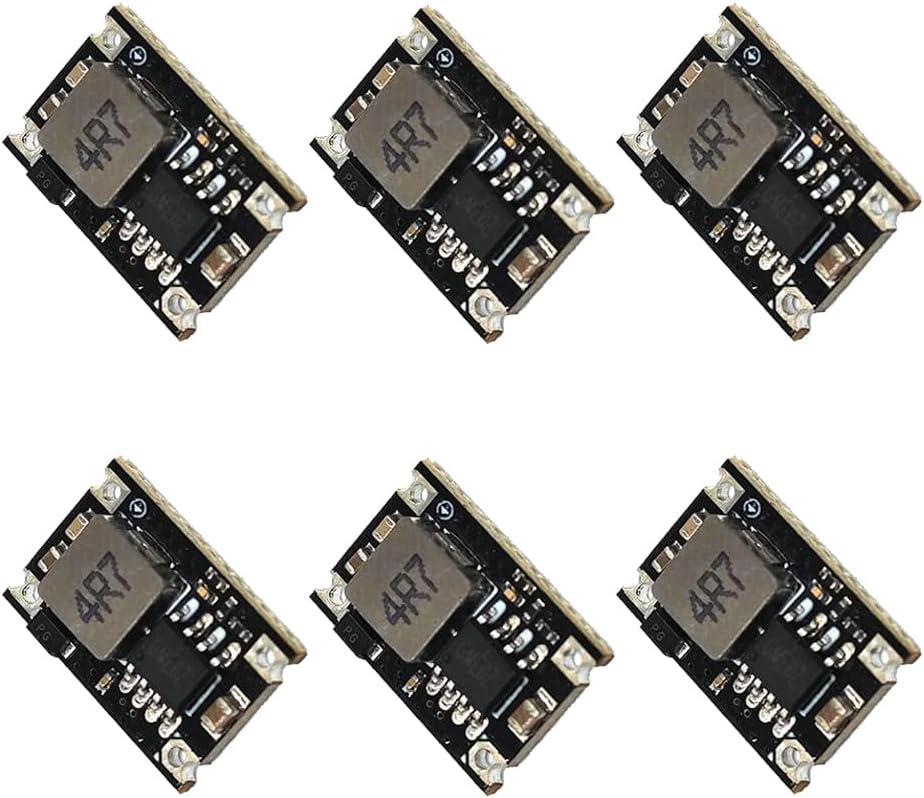
4.9Editor score
This side by side comparison table presents key specifications for all ten selected voltage regulator modules. It helps you quickly identify which model matches your specific input voltage current and size requirements for your electronics project.


This module delivers stable 3.3V output from inputs as high as 24V. With a 4.6 star rating it stands out for reliability and versatility in electronics projects. Its wide input range makes it ideal for diverse power sources.
We may earn a commission when you buy through this link, at no additional cost to you.
The compact design allows easy integration into embedded or portable builds. Low ripple and high switching frequency keep power clean. It can supply up to 1.8A to microcontrollers and sensors without voltage drops.
Inductive loads such as motors require additional protection components to avoid damage. While soldering is needed the small footprint compensates for the extra work. Most hobbyists find the installation straightforward with basic tools.
Buy this if you need a versatile regulator for varied input voltages. It suits makers and professionals requiring stable low voltage power. The five pack value makes it practical for multiple prototyping sessions.
Supports inputs from 4.5V up to 24V allowing use with many battery packs or adapters.
Ultra small size saves board space while maintaining high efficiency for portable devices.
We may earn a commission when you buy through this link, at no additional cost to you.
The AMS1117-3.3 is a trusted linear regulator delivering stable 3.3V with minimal circuit complexity. It earns a 4.1 star rating for reliability in low noise applications like audio or sensor circuits.
We may earn a commission when you buy through this link, at no additional cost to you.
Its three pin layout simplifies connections to development boards like Arduino or STM32. Built in overheat shutdown prevents damage during excessive load. The ten pack offers plenty for prototyping multiple circuits.
Linear regulators dissipate excess heat so efficiency is lower than switching types. Input voltage is capped at 12V which may not suit higher supply sources. Still it remains popular for quiet stable power needs.
Choose this when simplicity and low noise are priorities over efficiency. It works well for low current projects or when input stays below 12V. The bulk pack ensures you always have spares on hand.
Input output and ground pins allow quick soldering and integration into existing circuits.
Shuts down automatically when temperature exceeds limits to prevent permanent chip damage.
We may earn a commission when you buy through this link, at no additional cost to you.
This converter adjusts input between 1.8V and 5V to deliver steady 3.3V. Its perfect rating reflects reliability for low current portable gadgets. It handles both buck and boost modes for versatile battery operation.
We may earn a commission when you buy through this link, at no additional cost to you.
The low current limit suits sensors or low power MCUs. Its compact form factor works well inside wearables or small IoT devices. The flexible input range ensures stable power as batteries drain or charge.
Higher power projects exceed the 100mA capability. For demanding loads a different regulator with higher output is required. This module excels only in applications with modest current demands.
Buy this for battery operated portable devices needing stable voltage. It supports everything from single cell Li-ion to 5V sources. Ensure your load stays under 100mA to avoid performance issues.
Maintains 3.3V output regardless of input being higher or lower than target.
Optimized for devices drawing minimal current like environmental sensors or trackers.
We may earn a commission when you buy through this link, at no additional cost to you.
This Mini360 based module offers robust 1.5A output in a tiny package. A perfect rating shows users trust it for demanding applications. It handles inputs up to 24V making it versatile for many power sources.
We may earn a commission when you buy through this link, at no additional cost to you.
Low ripple and high switching frequency keep output clean even under load. The compact dimensions fit into dense PCB layouts easily. It is suitable for Arduino Raspberry Pi or STM32 projects needing higher current.
Inductive components like motors may generate ripple affecting sensitive chips. Adding protection capacitors or Zener diodes is recommended. Despite this the module performs well in standard digital circuits.
Select this for projects needing more than 800mA at 3.3V. It balances size and power output effectively. The five pack ensures you have backups for multiple builds or repairs.
Delivers up to 1.5A to power peripherals or multiple devices simultaneously.
Small size allows dense component placement on custom circuit boards.
We may earn a commission when you buy through this link, at no additional cost to you.
This pack offers excellent value for makers needing multiple regulators. It uses the reliable AMS1117-3.3 chip with safety protections. The 4.2 rating reflects solid performance for typical hobbyist electronics.
We may earn a commission when you buy through this link, at no additional cost to you.
Protection features safeguard your circuits during overload or overheating. The three pin design simplifies soldering to MCU boards. It works well for sensors or low power logic circuits needing steady voltage.
Higher current demands exceed the 800mA limit. Input voltage restriction may prevent use with 24V supplies. These limits are acceptable for many standard embedded or portable projects.
Buy this for cost effective prototyping across multiple projects. It ensures you have spares for repairs or expansions. Verify your current needs stay within 800mA for reliable operation.
Shuts down on overheat or overcurrent to protect both module and load.
Seven modules per pack reduce cost per unit for large scale prototyping.
We may earn a commission when you buy through this link, at no additional cost to you.
This large pack supports extensive prototyping or production runs. It uses the standard AMS1117-3.3 LDO for stable output. A perfect rating confirms quality and reliability across all units.
We may earn a commission when you buy through this link, at no additional cost to you.
Protection features prevent damage during abnormal conditions. The wide temperature range suits industrial or automotive applications. Plug and play wiring reduces setup time for testing.
Linear regulators waste more heat under heavy load. Battery life may be shorter compared to switching options. Still it remains ideal for low noise and simple designs.
Choose this for workshops or labs needing many regulators. It covers repairs and prototyping with ease. Confirm your current draw stays under 800mA for best results.
Operates safely from -40C to 125C for industrial or outdoor use.
Fifteen units ensure you never run out during development phases.
We may earn a commission when you buy through this link, at no additional cost to you.
This module handles higher inputs up to 30V in a tiny frame. It offers 1.8A output for more demanding loads. The lower rating hints at quality variation but many units perform well.
We may earn a commission when you buy through this link, at no additional cost to you.
Compact size suits dense PCB designs. Reverse polarity marks reduce wiring mistakes. Low ripple and stable output keep sensitive chips safe from noise.
Handling small boards demands care during soldering. Quality can vary between batches so testing units is wise. For tight spaces this remains a strong option.
Buy this when space and high voltage input are critical. Ensure your setup supports the output current needs. Testing before integration helps avoid issues from faulty units.
Accepts up to 30V input expanding power source options significantly.
Miniature dimensions allow fitting into tight and compact enclosures.
We may earn a commission when you buy through this link, at no additional cost to you.
This converter suits solar panels and vehicle power systems. It handles inputs up to 30V while delivering steady 3.3V. Each unit undergoes testing before shipping for consistent quality.
We may earn a commission when you buy through this link, at no additional cost to you.
High peak current supports peripherals needing bursts of power. Compact size fits wearables or drones easily. Soldering wires is straightforward for permanent installations.
Continuous current may be less than peak values. Soldering is necessary rather than pin connectors. These trade offs suit most DIY and maker applications.
Select this for off grid or automotive projects. It provides clean stable power for MCUs. Verify load requirements stay within continuous limits for best results.
Handles 4.5V to 30V inputs from batteries or vehicle systems.
Each module is tested before shipping to ensure reliable performance.
We may earn a commission when you buy through this link, at no additional cost to you.
This pack supports bulk prototyping with reliable modules. Adjustable start limit helps manage inrush current. A perfect rating shows consistent quality across the units.
We may earn a commission when you buy through this link, at no additional cost to you.
Protection features protect circuits from overcurrent. The simple design allows fast connections. It works well for Arduino or ESP32 projects.
Input limited to 7V means it is not for high voltage sources. Current limit restricts use to low power devices. These limits fit many common electronics designs.
Buy this for flexible voltage limit needs. The ten pack ensures spares for experiments. Confirm your power source stays within the voltage range.
Customizes start behavior to protect loads from inrush current.
Ten units reduce cost per project and provide backups.
We may earn a commission when you buy through this link, at no additional cost to you.
This module delivers 1.8A in a tiny footprint. It earns a 4.9 rating for reliability and performance. It combines high output with compact size ideal for aircraft or IoT.
We may earn a commission when you buy through this link, at no additional cost to you.
Low ripple and high switching frequency keep power stable. The small size suits tight layouts. Protection for inductive loads ensures safe operation.
Soldering requires care due to small pads. Inductive components need protection to avoid noise. Despite these the module excels in performance.
Choose this for high current and space constrained designs. It fits drones and portable devices easily. Verify soldering skills to ensure strong connections.
Delivers 1.8A output while occupying minimal board space.
4.9 star rating confirms consistent quality across batches.
We may earn a commission when you buy through this link, at no additional cost to you.
Choosing the right regulator requires balancing input voltage range output current size and efficiency. This guide outlines key factors to ensure stable power for your electronics.
Ensure the regulator accepts your source voltage. Modules handling up to 24V or 30V suit batteries or vehicle power. Lower ranges like 12V fit standard adapters.
Check your supply voltage stays within the input limits to avoid damage or inefficiency.
Match the regulator current rating to your load. Microcontrollers may need 500mA while sensors need less. Higher current modules handle peripherals or multiple devices.
Select a module with headroom above your max load for stable performance.
Buck converters are efficient for higher inputs and current. Linear regulators like AMS1117 suit low noise needs. Decide based on efficiency and noise tolerance.
Choose buck for efficiency and linear for quiet power.
Compact modules save space in portable or embedded designs. Check dimensions before choosing. Mini360 sizes fit tight layouts easily.
Measure your PCB to confirm fit before purchase.
Overheat and overcurrent protection prevent damage. Inductive loads need additional components like diodes. Look for built in protections.
Safety features protect both regulator and connected devices.
Bulk packs offer better value for prototyping. Ensure you need multiple units. Single units may suit repairs.
Buy in packs to reduce cost per unit.
Most modules require soldering. Pin headers simplify connections. Verify tools and skill level.
Ensure you can solder connections securely.
Switching regulators dissipate less heat. Linear types get warm under load. Consider thermal management.
Plan for heat dissipation in enclosed spaces.
Connect input voltage within the specified range to avoid damage. Use power supplies that match the module limits.
Ensure output connections stay below max current. Add heat sinks or fans if running near limits.
Protect inductive loads with diodes or capacitors to prevent voltage spikes damaging the regulator.
No use a regulator designed for 3.3V output to avoid damaging components. A 5V output exceeds safe limits for 3.3V logic. Select a buck or linear regulator with 3.3V fixed output for safe operation.
Heat sinks are usually unnecessary for low currents. Higher loads may cause heat buildup. Check if the module runs hot and consider adding airflow or a heat sink if needed.
Buck converters switch to drop voltage efficiently while linear regulators dissipate heat. Buck units suit higher inputs and currents. Linear types provide cleaner output with less noise.
Add a diode across motor terminals to absorb voltage spikes. Capacitors also help filter noise. These components prevent reverse voltage from affecting the regulator or microcontroller.
Yes modules with wide input ranges like up to 30V suit solar panels. Ensure output voltage stabilizes at 3.3V. Use capacitors to smooth voltage fluctuations from solar sources.
Use thin insulated wires for low current modules. Thicker wires suit higher currents to prevent voltage drop. Ensure connections are secure and insulated to avoid shorts.
These ten regulators cover diverse needs from compact to high current. Select based on input range output needs and size. Budget and protection features also matter.
Prioritize input voltage matching and current capacity. Ensure heat management and protection features suit your load. Verify soldering and mounting requirements.
Prices and availability change frequently so check current listings before buying. Confirm details on the product page for accurate specs and stock.