
HiLetgo 5pcs DHT11
4.5Editor score
Single-wire wiring scheme
Pre-calibrated digital output
Easy integration options
This guide compares the top Arduino temperature sensors for accuracy, durability, and ease of use to help you choose the best module for your project.
Finding the right Arduino temperature sensor is crucial for any electronics project requiring environmental monitoring. Whether you are building a weather station or a smart home device, the right module ensures reliable data collection for your microcontroller applications.
We evaluated ten leading sensors based on accuracy, range, communication protocol, and ease of integration. Each product was assessed for its suitability across different environments and compatibility with popular development boards used by hobbyists and professionals alike.
Each pick highlights specific strengths and ideal use cases to help you decide quickly. Keep in mind that prices can change due to sales or stock levels, so verify current offers before finalizing your purchase decision for your next build.
4.5Editor score

4.7Editor score

4.9Editor score
The following table offers a side-by-side comparison of the top ten temperature sensors available for Arduino projects. Review the key specifications to identify the best fit for your specific environmental monitoring needs and budget constraints.




The Teyleten Robot SHT31-D module stands out as a top choice for users needing precise environmental data. With a strong rating of 4.7 stars, it offers superior accuracy compared to many standard sensors available on the market today.
We may earn a commission when you buy through this link, at no additional cost to you.
Its standout quality lies in its ability to measure temperatures from -40 to 125 degrees Celsius with an error margin of only ±0.3 degrees. This level of precision makes it ideal for scientific projects or industrial monitoring tasks where small deviations matter significantly.
While the price is higher than basic models, the reliability and performance justify the cost. Users may need to understand I2C communication, but the stable output and wide voltage range of 2.4V to 5.5V provide flexibility in power sourcing for various setups.
If you require accurate humidity and temperature readings for critical applications, this sensor is highly recommended. It performs consistently across a broad range of conditions, making it a trusted companion for demanding Arduino and Raspberry Pi based systems.
The ±0.3°C accuracy ensures your project data is reliable for scientific or industrial monitoring needs.
Supporting 2.4V to 5.5V and I2C allows easy integration into most modern microcontroller projects.
We may earn a commission when you buy through this link, at no additional cost to you.
The HiLetgo 5pcs DHT11 pack is an excellent entry point for beginners looking to monitor temperature and humidity. Rated at 4.5 stars, it delivers consistent performance for basic household projects without breaking the bank.
We may earn a commission when you buy through this link, at no additional cost to you.
Its single-wire wiring scheme makes integration incredibly simple. The module comes pre-calibrated with a bypass capacitor and pull-up resistor on-board, reducing the need for external components and simplifying the physical setup on a breadboard.
The communication protocol is straightforward which greatly reduces programming effort. This allows users to focus on building their project logic rather than debugging complex sensor drivers or communication handshake sequences.
This pack is perfect for classrooms or prototyping phases where multiple sensors are needed at once. While the range is limited to 0 to 50 degrees, it covers most common indoor environments effectively for casual monitoring tasks.
Integrated components like the pull-up resistor make wiring quick and hassle-free for new hobbyists.
Getting five modules in one pack allows you to deploy sensors across multiple areas easily.
We may earn a commission when you buy through this link, at no additional cost to you.
The DROK 2 Pack Waterproof sensor offers a robust solution for measuring temperature in wet or harsh environments. With an impressive rating of 4.9 stars, it combines durability with high accuracy for demanding applications.
We may earn a commission when you buy through this link, at no additional cost to you.
Its waterproof stainless steel casing ensures the probe can withstand continuous submersion without corrosion. This makes it ideal for monitoring fish tanks, greenhouses, or industrial machinery where moisture is a constant factor.
The package is comprehensive, including adapter boards and jumper wires for immediate use. The integrated pull-up resistor simplifies wiring and ensures stable communication on the 1-Wire bus without extra components.
Investing in this premium option pays off in reliability and longevity. If your project involves liquids or extreme conditions, this sensor provides the protection and precision needed to maintain consistent operation over time.
The corrosion resistant stainless steel probe survives submersion where standard plastic sensors would fail.
Includes resistors and jumper wires so you can start testing right out of the box.
We may earn a commission when you buy through this link, at no additional cost to you.
The Gikfun 1M DS18B20 sensor provides a practical solution for measuring temperature at a distance from the microcontroller. Rated 4.4 stars, it is favored by users needing extra reach without signal loss issues.
We may earn a commission when you buy through this link, at no additional cost to you.
The probe is waterproof and comes with an adapter module containing a pull-up resistor. This setup supports various environments like greenhouses or outdoor setups where the sensor must be placed away from the main electronics.
Its wide measuring range of -55 to 125 degrees covers most industrial and consumer needs. The yellow data red power and black ground wires are color coded for easy identification during installation.
If your project requires placing the sensor in a tight or distant spot, the 1 meter lead is a significant advantage. It balances performance and convenience effectively for general purpose temperature monitoring tasks.
The 1 meter cable allows sensor placement away from heat sources or cramped electronics enclosures.
Pre installed adapters remove the need for soldering external resistors during setup.
We may earn a commission when you buy through this link, at no additional cost to you.
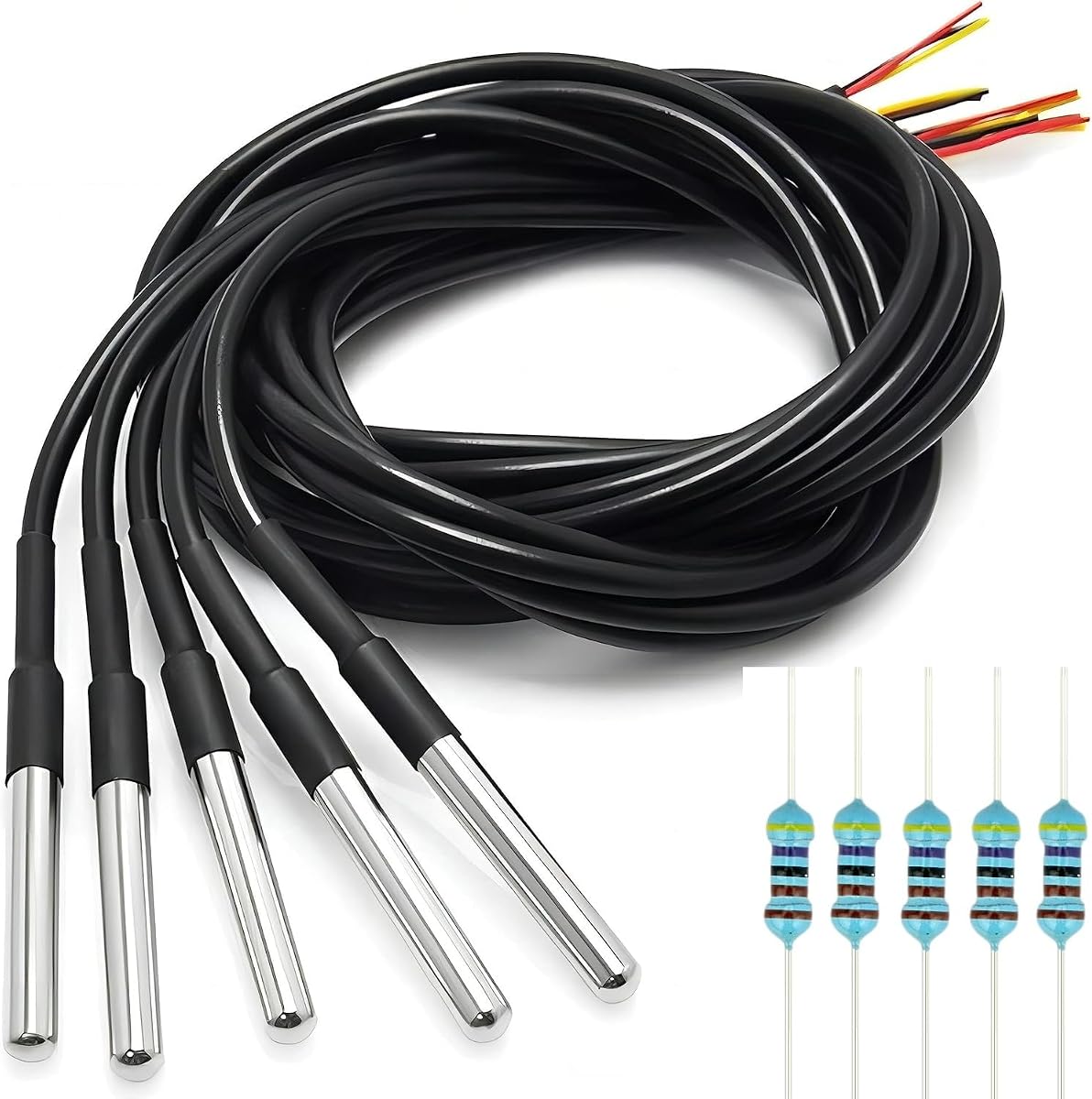
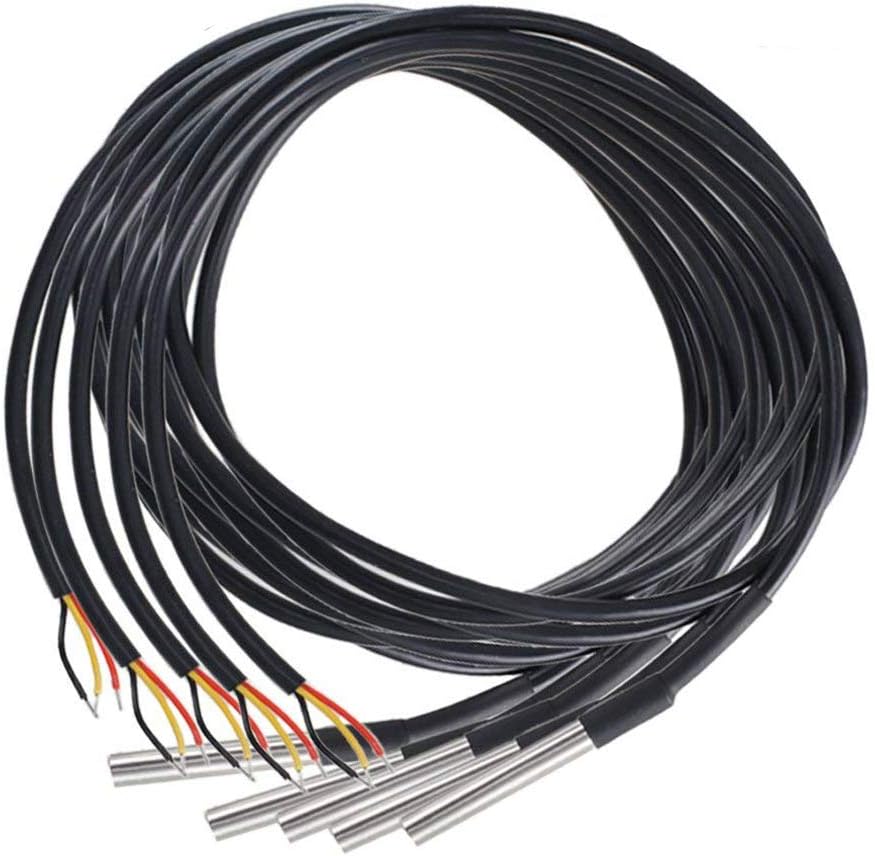
The WWZMDiB 5 Pcs DS18B20 pack offers high value for projects needing multiple sensors. With a rating of 4.4 stars, these probes are capable of underwater use and work well in wet environments.
We may earn a commission when you buy through this link, at no additional cost to you.
Each probe comes equipped with a 4.7K resistor making wiring straightforward. The standard red yellow and black color scheme ensures you can easily identify power data and ground connections during assembly.
Designed for high accuracy, these sensors maintain precision across a wide temperature range. They are compatible with popular boards like Arduino ESP32 and STM32 allowing for flexible project development.
This pack is ideal for large scale monitoring like tracking temperature across a server room or garden. The included resistors save time and ensure you have everything needed to get started immediately.
With five probes included you can monitor several distinct areas with a single microcontroller setup.
Each probe comes with a resistor so you avoid extra component purchases for 1-Wire stability.
We may earn a commission when you buy through this link, at no additional cost to you.
This DHT11 module set is a solid choice for beginners starting their sensor journey. Rated 4.3 stars, it provides high reliability and stability for standard indoor temperature monitoring projects.
We may earn a commission when you buy through this link, at no additional cost to you.
The sensor uses a resistive element and a sense of wet NTC temperature device paired with a microcontroller. This design ensures accurate digital output without the need for analog to digital conversion on your board.
Its single-wire wiring scheme simplifies integration significantly. You can easily connect it to GPIO pins using the included wires, making prototyping fast and efficient for learning purposes.
If you need a basic sensor for a simple home automation task, this module delivers well. The high reliability ensures consistent data over time, which is essential for long-term logging projects.
Pre included wires and simple digital output make this perfect for learning electronics basics.
Excellent long term stability ensures your device continues to report accurately for months.
We may earn a commission when you buy through this link, at no additional cost to you.
The DROK waterproof sensor is engineered for harsh conditions where standard sensors might fail. Its 4.9 rating reflects its ability to maintain precision in demanding environments like water or chemical monitoring.
We may earn a commission when you buy through this link, at no additional cost to you.
Featuring a waterproof and corrosion-resistant stainless steel probe, it handles continuous submersion effectively. The sealant used in its construction ensures the internal components remain dry and protected from external moisture.
Integration is quick thanks to the clearly separated wires and integrated pull-up resistor. This design reduces errors during wiring and ensures a stable connection to the Raspberry Pi or Arduino GPIO ports.
Use this sensor when you need to measure fluid temperatures or monitor industrial processes. Its durability and accuracy make it a trustworthy tool for any project requiring sustained performance in wet conditions.
The stainless steel casing protects the sensor from rust and corrosion in wet environments.
Integrated pull-up resistors reduce the component count needed on your breadboard.
We may earn a commission when you buy through this link, at no additional cost to you.
The Gikfun 5PCS DS18B20 kit provides a cost-effective way to outfit multiple zones with sensors. With a 4.5 star rating, these waterproof probes are suitable for various thermal sensitive systems.
We may earn a commission when you buy through this link, at no additional cost to you.
Each probe features a 1-meter cable allowing flexibility in placement. This length is particularly useful for reaching into large containers or outdoor areas where the control board is located elsewhere.
The unique single bus interface means you can chain multiple sensors on one pin. However, be sure to use a 4.7K resistor between Data and VCC for stable performance across your bus.
Ideal for large projects like room monitoring or industrial systems, this kit offers consistent performance. The standard red yellow and black wires ensure you can identify connections quickly during installation.
The 1-Wire bus allows multiple probes on one pin for expanding your coverage area.
The 1 meter length gives you flexibility to place probes far from the Arduino.
We may earn a commission when you buy through this link, at no additional cost to you.
The HiLetgo DHT22 module offers improved performance over the standard DHT11. Rated 4.4 stars, it is a high sensitive sensor ideal for projects requiring full humidity range monitoring.
We may earn a commission when you buy through this link, at no additional cost to you.
Its measurement accuracy of ±0.5 degrees Celsius is significantly better than budget alternatives. This makes it suitable for applications where precise temperature data is critical for system control or logging.
The module includes fixing screw holes for convenient installation and mounting. This design feature ensures the sensor stays securely in place even in environments with vibration or frequent handling.
Choose this sensor if you need to measure humidity from 0 to 100%RH accurately. Its ability to replace older SHT models makes it a versatile upgrade for existing DIY electronics practice.
With 0 to 100%RH measurement you can track extreme humidity changes accurately.
Screw holes ensure the module stays firmly fixed during transport or active use.
We may earn a commission when you buy through this link, at no additional cost to you.
The HiLetgo 5pcs DS18B20 pack provides a solid option for monitoring temperature in varied environments. Its 4.5 rating indicates reliable performance for general industrial or consumer systems.
We may earn a commission when you buy through this link, at no additional cost to you.
The stainless steel package ensures durability and protection against physical damage. Combined with waterproofing, these probes can handle outdoor conditions or damp indoor areas without degrading over time.
Each unit comes with a 1-meter cable which supports flexible placement. The wide temperature range of -55 to 125 degrees Celsius covers almost every standard application requirement.
This pack is great for projects needing multiple sensors without high costs. While you must add your own resistors, the quality of the probes themselves makes them a strong choice for bulk builds.
The stainless steel casing protects the probe from physical damage and corrosion.
Supporting -55 to 125 degrees allows usage in most environmental or industrial conditions.
We may earn a commission when you buy through this link, at no additional cost to you.
Selecting the right temperature sensor depends on your project requirements environment and technical knowledge. This guide breaks down the critical factors to consider for optimal performance.
Every sensor has a specific operating temperature range. For indoor applications a range of 0 to 50 degrees is often sufficient but industrial tasks may require capabilities from -55 to 125 degrees Celsius.
Always verify that the sensor covers the expected extremes in your environment to prevent damage or inaccurate readings.
Accuracy determines how close the reading is to the true temperature. Some sensors offer ±2 degrees while others provide ±0.3 degrees which is vital for precision tasks.
For general hobby projects higher accuracy is less critical but scientific work demands sensors with lower error margins.
Sensors use digital protocols like 1-Wire I2C or single-wire serial. 1-Wire is simple but requires pull-up resistors while I2C is faster and supports multiple devices on the same bus.
Choose a protocol that matches your microcontroller capabilities and your comfort level with coding libraries.
If your sensor will be exposed to moisture or dust look for waterproof or enclosed models. Stainless steel probes are excellent for liquid immersion and durability.
Standard plastic modules are fine for dry indoor spaces but may fail quickly in harsh outdoor conditions.
Ensure the sensor operates within your microcontroller voltage such as 3.3V or 5V. Many modern modules accept a wide range from 2.4V to 5.5V ensuring versatility.
Mismatched voltage can damage the sensor or result in unstable readings so check power requirements carefully.
Some sensors come with fixed cables while others are bare modules. If you need to place the sensor far from the board opt for longer probe options to avoid signal loss.
A longer cable adds flexibility to your setup but may require careful management to avoid interference.
Check if the package includes resistors wires or adapter boards. This can save you money and assembly time when starting your project.
A complete kit reduces the need for extra trips to the electronics store and ensures all parts match.
Start by verifying your voltage requirements and connecting the power and ground wires correctly. Incorrect wiring can damage both the sensor and your Arduino board so double check the pinout before powering up.
Install the appropriate library in the Arduino IDE to interpret the digital signals. For 1-Wire sensors you may need to add a pull-up resistor between the data line and voltage pin to stabilize communication.
Protect your sensor from physical damage and harsh conditions. If using waterproof probes ensure the seal remains intact and clean the probe regularly to maintain accurate readings over time.
The SHT31-D offers the highest accuracy with ±0.3°C error compared to basic modules. It is ideal for scientific projects where precise data collection is critical.
Yes DS18B20 probes with waterproof stainless steel casings are designed for submersion. Ensure the sealant is intact before placing them in water.
Most 1-Wire sensors require a 4.7K resistor between data and power for stable communication. Some modules include this resistor internally so check the product details.
You can connect multiple 1-Wire sensors to a single pin using unique addresses. The number depends on your memory and power capacity but dozens are possible.
The DHT11 is best for hobbyist indoor use. Industrial environments often need more robust sensors like SHT31 or DS18B20 for better durability.
Instability often stems from missing pull-up resistors or loose wiring. Ensure connections are secure and voltage levels match the sensor specifications.
We highlighted top picks like the SHT31-D for accuracy and the DHT11 for budget needs. Each sensor serves a specific purpose depending on your project requirements and technical constraints.
Prioritize accuracy and environmental protection for critical applications. A slightly higher cost upfront often saves time and replacement costs in the long run.
Remember to verify current prices and stock levels before purchasing. These details may fluctuate so checking the latest offers ensures you get the best value.