
Wireless Digital Microscope, Skybasic 50X-1000X Magnification WiFi Portable Handheld Microscopes
4.2Editor score
WiFi and USB Connectivity
Eight Adjustable LED Lights
Portable Handheld Design
Discovering the hidden world of insects requires the right tools for observation. A digital microscope for studying insects offers a modern alternative to traditional optical models, providing high-resolution imaging and easy sharing capabilities. Whether you are a student, hobbyist, or educator, these devices transform field observations into detailed digital records.
We have evaluated a wide range of digital microscopes based on their optical performance, connectivity options, and ease of use. Our selection includes portable handheld units for field work and more robust stationary models for detailed lab analysis. Each product was assessed for its ability to capture fine details of insect anatomy and behavior clearly.
This guide presents ten top-rated models, highlighting their unique strengths and potential limitations. We explore compatibility with various devices, battery life for outdoor use, and specific features like LED lighting for better illumination. Please note that product availability and pricing may change, so verify details before purchasing to ensure you get the best value.
4.2Editor score

4.5Editor score

4.4Editor score
As an Amazon Associate we earn from qualifying purchases.
The following table provides a side-by-side comparison of the top digital microscopes evaluated for insect study. It highlights key specifications such as magnification range, screen size, and connectivity options to help you make an informed decision.



The Andonstar AD246S-M stands out as a powerful tool for serious insect study due to its 2160P UHD recording and three interchangeable lenses. With a 4.5 rating, it balances professional features with user-friendly operation, making it suitable for detailed biological analysis.
We may earn a commission when you buy through this link, at no additional cost to you.
Its ability to output to an HDMI monitor allows for clear viewing on larger screens, which is essential for examining fine insect structures like wing veins or mouthparts. The inclusion of a metal stand ensures stability during observation, reducing vibrations that can blur images.
While the price is higher than portable models, the versatility provided by different lenses and measurement software justifies the investment for those needing detailed data. The requirement for setup means it is less ideal for quick field observations compared to handheld units.
This model is best suited for educators, researchers, or hobbyists who require high-quality images and measurements. Its comprehensive kit ensures you have everything needed to start exploring the microscopic world of insects immediately.
The UHD 2160P capability allows for clear recording of insect movement and detailed anatomy for later analysis.
Three lenses provide flexibility for observing large specimens like whole insects or detailed slides.
We may earn a commission when you buy through this link, at no additional cost to you.
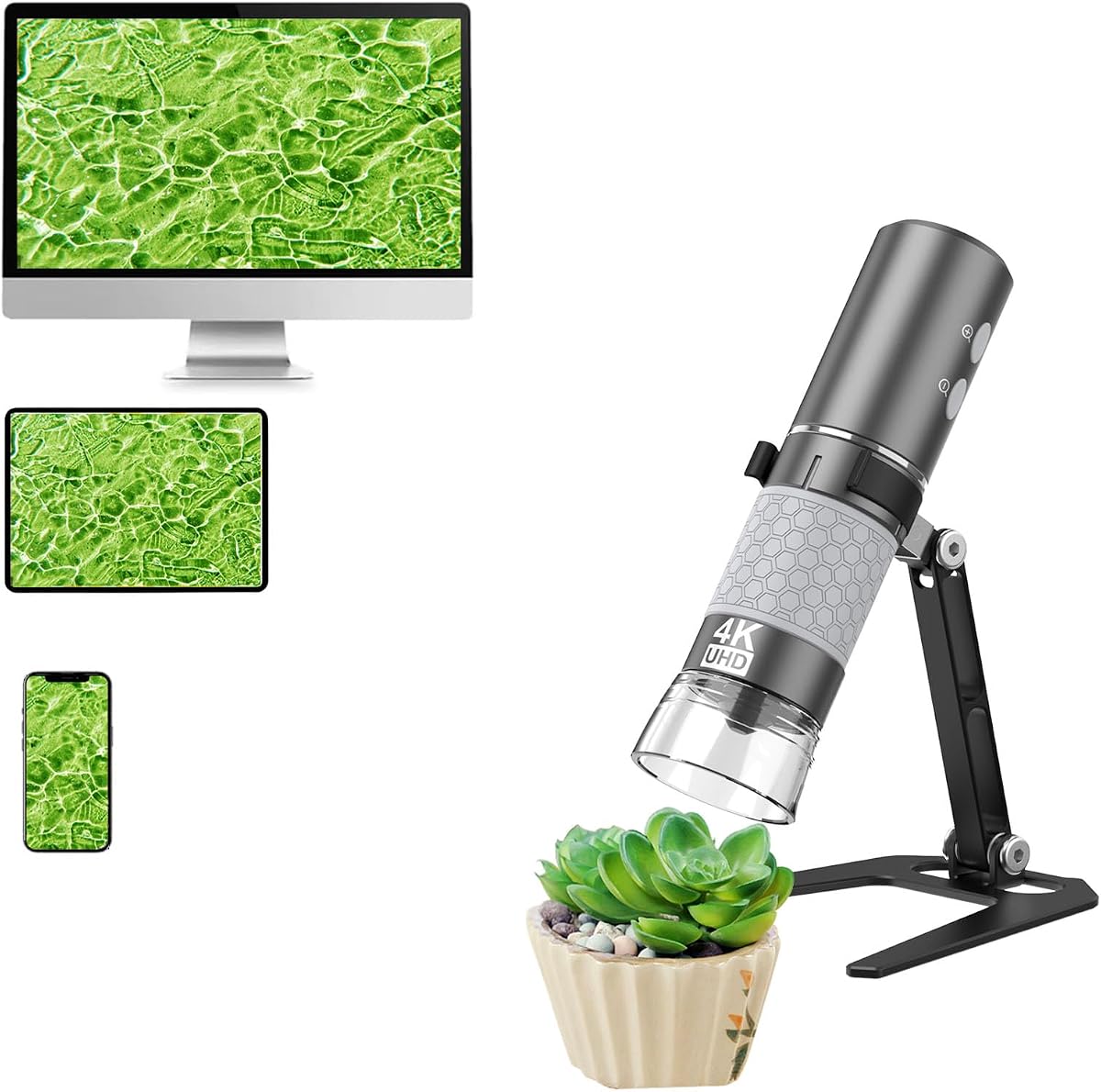
The Skybasic Wireless Digital Microscope offers exceptional value for those seeking an affordable way to study insects. With a 4.2 rating, it provides significant magnification and connectivity options that make it accessible to a wide audience.
We may earn a commission when you buy through this link, at no additional cost to you.
Its wireless capability allows you to connect to smartphones or tablets easily, which is perfect for documenting findings during outdoor trips. The eight adjustable LED lights ensure you can illuminate dark crevices where insects might hide.
While it requires connecting to an app for full functionality and has a specific focal length range, these are minor trade-offs given the price. It is designed more as a portable magnifying tool rather than a high-precision instrument.
Ideal for casual explorers or families looking to introduce children to entomology without a large investment. The included stand adds versatility for tabletop use, while the handheld nature supports field exploration.
Connect directly to iOS or Android devices via WiFi hotspot for real-time viewing and capture.
Eight LEDs allow you to control brightness to reduce glare on shiny insect surfaces.
We may earn a commission when you buy through this link, at no additional cost to you.
The Elikliv EM4K-AF represents the pinnacle of digital microscopy with its 4K UHD video and automatic focus technology. Its 4.4 rating reflects high user satisfaction regarding image clarity and ease of use for detailed examinations.
We may earn a commission when you buy through this link, at no additional cost to you.
The auto-focus feature is particularly beneficial for studying live insects that may move, ensuring the image remains sharp without manual intervention. The large 8-inch screen provides an immersive view, making it easy to share observations with students or peers.
While the cost is a barrier for some, the professional grade features and durability make it a long-term investment. It bridges the gap between traditional lab equipment and portable digital tools effectively.
This model is ideal for professionals or serious hobbyists who demand the highest image quality. The rechargeable battery ensures you are not tethered to a power source during extended use.
AI algorithms continuously adjust focus to maintain clarity even with moving insect specimens.
4K video capture allows for detailed frame-by-frame analysis of insect behavior.
We may earn a commission when you buy through this link, at no additional cost to you.
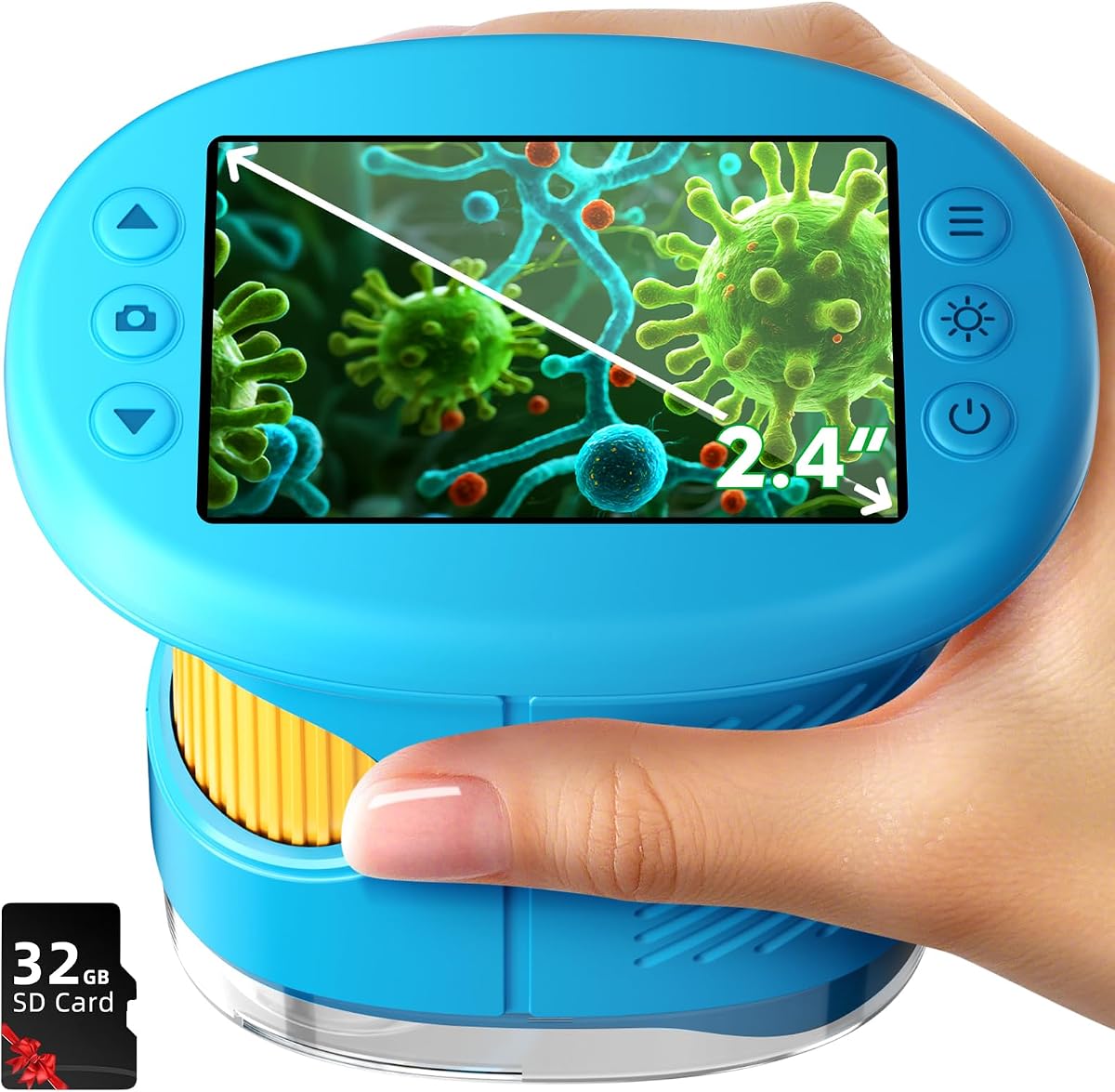
The Odatay 4K Digital Microscope is specifically designed to engage young learners with its bright screen and simple controls. Rated at 4.5, it offers a robust experience for children interested in exploring insects and plants in their environment.
We may earn a commission when you buy through this link, at no additional cost to you.
Included accessories like the 32G card and prepared slides make it ready for immediate use. The long-distance viewing option helps children capture insects from a distance without disturbing them.
While not intended for professional research, it exceeds typical toy microscopes in functionality. The build quality is durable enough to withstand active use by children.
This is an excellent gift for young scientists to foster curiosity. It simplifies the process of capturing digital images of bugs, allowing kids to focus on exploration.
Comes with prepared slides and memory card to ensure ready-to-use educational value.
Lightweight with a neck strap for easy carrying during nature walks.
We may earn a commission when you buy through this link, at no additional cost to you.
This WiFi Digital Microscope offers a versatile solution with 4K resolution potential and a long battery life for extended observation sessions. With a 4.5 rating, users appreciate its compatibility across various devices and its flexible usage modes.
We may earn a commission when you buy through this link, at no additional cost to you.
The included bracket allows for stable positioning on a table, which is crucial for detailed insect work. Its ability to connect wirelessly to phones makes it easy to document findings instantly without cables.
While the phone screen may not always support true 4K display, the recording capabilities still offer high detail. The battery life ensures you can use it all day without interruption.
Suitable for both indoor study and outdoor fieldwork. The ease of use and connectivity options make it a reliable tool for students and hobbyists alike.
Four hours of battery life allow for uninterrupted exploration during long outdoor excursions.
The adjustable stand enables stable setups for hands-free viewing and recording.
We may earn a commission when you buy through this link, at no additional cost to you.
Designed specifically for younger children, this 1000X Handheld Digital Microscope provides a safe and engaging way to study insects. Its 4.5 rating highlights its durability and ease of use for toddlers and early elementary students.
We may earn a commission when you buy through this link, at no additional cost to you.
The anti-shake design helps children capture clear images without frustrating vibrations. Safety certifications ensure the materials used are non-toxic and smooth for little hands.
Although the battery life is limited to two hours, it is sufficient for typical exploration sessions. The portability allows it to be used anywhere, from the backyard to a classroom.
This is a top choice for introducing young children to science. Its robust design withstands drops, and the simple interface encourages independent learning.
Shock-absorbent casing ensures the device survives active play and drops by children.
Oversized focus dials make it easy for uncoordinated fingers to operate successfully.
We may earn a commission when you buy through this link, at no additional cost to you.
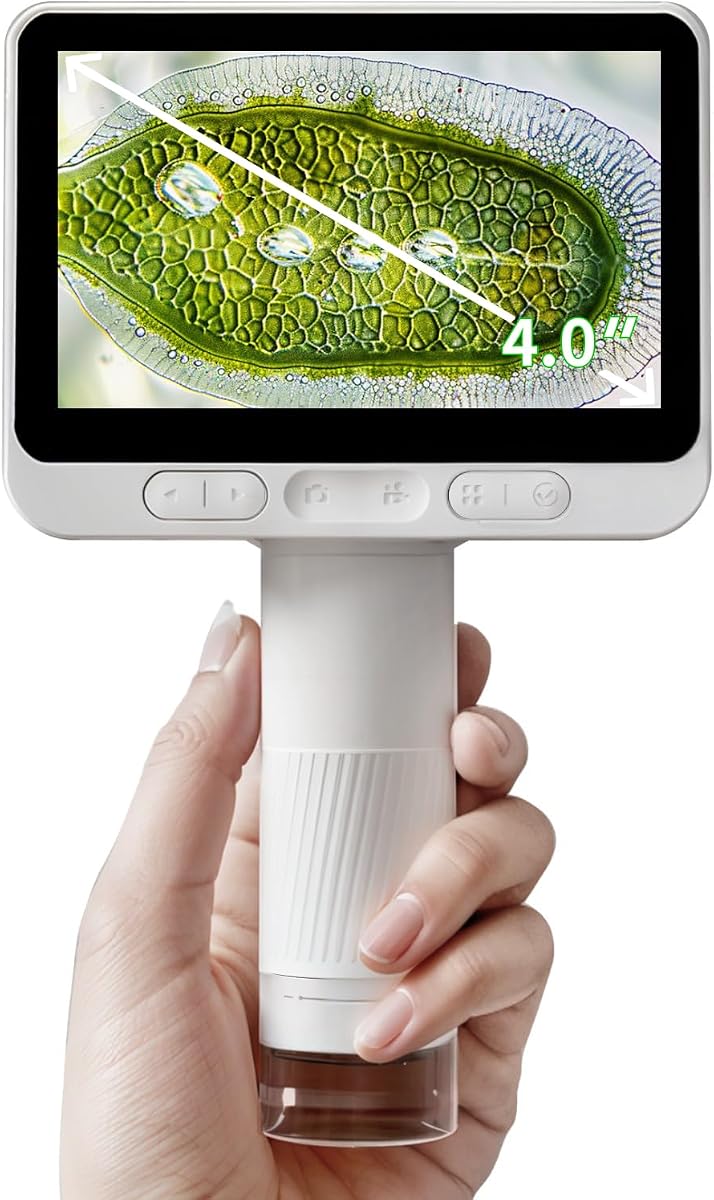
The BEAVERLAB Finder offers a larger 4.0 inch screen compared to many competitors, providing better visibility for insect observation. With a 4.6 rating, it is highly praised for its clear imaging and user-friendly sharing features.
We may earn a commission when you buy through this link, at no additional cost to you.
The built-in hotspot allows easy transfer of images to mobile devices for sharing with family or on social platforms. The 1600X magnification range provides sufficient detail for most educational needs.
While slightly larger, its portability remains high for a handheld device. The screen quality ensures that details are easily visible without straining the eyes.
This is an excellent option for children who want to share their discoveries. The balance of screen size and portability makes it a versatile tool for learning.
The 4.0 inch screen provides a wider field of view for easier specimen tracking.
Hotspot functionality enables quick image uploads to mobile devices for social sharing.
We may earn a commission when you buy through this link, at no additional cost to you.
Built for adventure, this 1000X Digital Handheld Microscope is designed to withstand outdoor conditions while studying insects. Its 4.4 rating reflects strong durability and ease of use in field environments.
We may earn a commission when you buy through this link, at no additional cost to you.
The stabilization design helps keep images steady even during movement, which is common in outdoor settings. USB-C charging ensures modern compatibility for power sources.
While it lacks a stand, the handheld focus is perfect for dynamic observation sessions. The battery life supports long trips into nature.
Ideal for active children who need a robust tool for fieldwork. It simplifies the process of documenting discoveries during hikes and backyard explorations.
Enhanced stabilization helps maintain image clarity even during active outdoor observation.
USB-C charging ensures fast and convenient power replenishment for field use.
We may earn a commission when you buy through this link, at no additional cost to you.
This 4K WiFi Microscope distinguishes itself with broad device compatibility, including Linux systems which are often unsupported by others. Its 4.2 rating indicates satisfaction among users looking for versatile connectivity options.
We may earn a commission when you buy through this link, at no additional cost to you.
The ability to switch between wireless and wired modes offers flexibility for different environments. Wide angle and long focal length options accommodate both close-up details and broader views of insects.
While zoom functions may vary by platform, the core imaging quality remains strong. It is a reliable choice for users with diverse computing needs.
Perfect for educators or researchers using various operating systems. It bridges the gap between smartphone convenience and PC-based analysis.
Compatible with a wide range of systems including Linux and Chrome OS.
Wide angle and telephoto options allow for diverse observation distances.
We may earn a commission when you buy through this link, at no additional cost to you.
The Andonstar AD266S offers the highest magnification range in this guide, reaching up to 5000X. With a 4.3 rating, it is valued for its professional capabilities in detailed biological research.
We may earn a commission when you buy through this link, at no additional cost to you.
The X-Y moveable stage allows precise positioning of specimens, which is critical for high-magnification work. Five lenses provide extensive versatility for different types of insect anatomy.
While complex to set up and expensive, it offers capabilities closer to a lab microscope. It is suitable for advanced users who need extreme detail.
Ideal for serious research or advanced educational programs. Its power ensures that even the smallest insect structures are visible and measurable.
Up to 5000X magnification enables viewing of extremely fine biological details.
X-Y moveable stage facilitates accurate positioning for detailed analysis.
We may earn a commission when you buy through this link, at no additional cost to you.
Selecting the right digital microscope for studying insects depends on several factors including magnification needs, portability, and budget. This guide outlines key considerations to help you make an informed choice.
Magnification determines how large an insect appears. For general observation, 100X to 1000X is usually sufficient to see body parts like antennae and wings. Higher magnifications above 2000X are useful for cellular structures but may require a stable setup.
Choose a range that matches your specific study needs without sacrificing clarity.
Digital microscopes connect via WiFi, USB, or HDMI. Wireless options offer flexibility for fieldwork, while wired connections often provide faster data transfer for recording. HDMI models allow large screen viewing which is great for teaching.
Consider where you will use the device most often to select the right connection.
Handheld units are lightweight and easy to carry on nature hikes. Larger stationary models with stands offer stability but are harder to transport. Battery life is crucial for outdoor use to ensure uninterrupted recording.
Prioritize lightweight designs if you plan to move frequently during observations.
Resolution affects the detail captured in photos and videos. Models offering 4K recording provide clearer images for analyzing fine features. Ensure your device can support the resolution you choose to view it properly.
Higher resolution is beneficial for documentation and sharing results with others.
Insects often have reflective surfaces that cause glare. Adjustable LED lights allow you to control brightness and angle to reduce glare. Some models include diffusers for more even illumination.
Look for multiple adjustable LEDs to handle different lighting conditions effectively.
User-friendly interfaces and simple controls make learning easier, especially for children. Auto-focus features can save time and keep subjects in focus. Check if software compatibility is required for full functionality.
Choose a model with intuitive controls to minimize setup time.
For outdoor or child use, durable materials like ABS plastic are important. Look for safety certifications to ensure non-toxic materials. A protective case helps prevent damage during transport.
Durability ensures longevity and safety for users of all ages.
Prices vary significantly based on features. Budget models offer basic functionality while premium models provide high resolution and advanced optics. Determine your budget based on the level of detail you require.
Balance cost with the features you actually need for insect study.
Start by charging the device fully before the first use. Connect to your desired device either via WiFi or USB cable to ensure the software or app is ready. For handheld models, hold steady or use the included stand to prevent blurry images.
When observing insects, adjust the brightness of the LED lights to avoid glare on shiny surfaces. Use the focus wheel or auto-focus feature to bring the specimen into sharp view. Take photos or record videos to document your findings.
Clean the lens regularly with a soft cloth to avoid scratches. Store the microscope in a dry place away from extreme temperatures to preserve the electronics. For models with lenses, handle them with care to avoid dropping or damaging the optics.
For most general insect studies, a range between 50X and 1000X is ideal. This allows you to see body parts clearly without losing too much of the specimen in the frame. Higher magnification is useful only for very fine details.
Yes, many digital microscopes have features like auto-focus or high shutter speeds that capture live movement. However, larger stationary models with stands provide the best stability for watching insects move around in real time.
Many modern models offer wireless connectivity to smartphones and tablets for viewing. However, some also connect directly to computers via USB or have built-in screens so you do not strictly need a phone.
Battery life varies by model, typically ranging from two to four hours of continuous use. It is wise to carry a portable charger if you plan on exploring for long periods without access to power outlets.
Most quality models are made from non-toxic, durable materials. However, ensure you choose ones with safety certifications like CE or FCC for children. Avoid models with small parts that could be choking hazards.
Some professional models include HDMI output which allows you to connect to a TV or monitor. This is helpful for presentations or classroom settings where multiple people need to see the details simultaneously.
We have explored ten excellent digital microscopes that offer unique advantages for studying insects. From the Andonstar AD246S-M for high-resolution lab work to the Skybasic for budget-friendly field exploration, there is a model for every need.
Prioritize features like battery life and portability if you plan to use your microscope outdoors. If detailed analysis is your goal, look for higher magnification and measurement software capabilities to enhance your findings.
Always check current pricing and availability before purchasing since these can change over time. With the right tool, you can turn simple observations into detailed educational experiences and professional research.