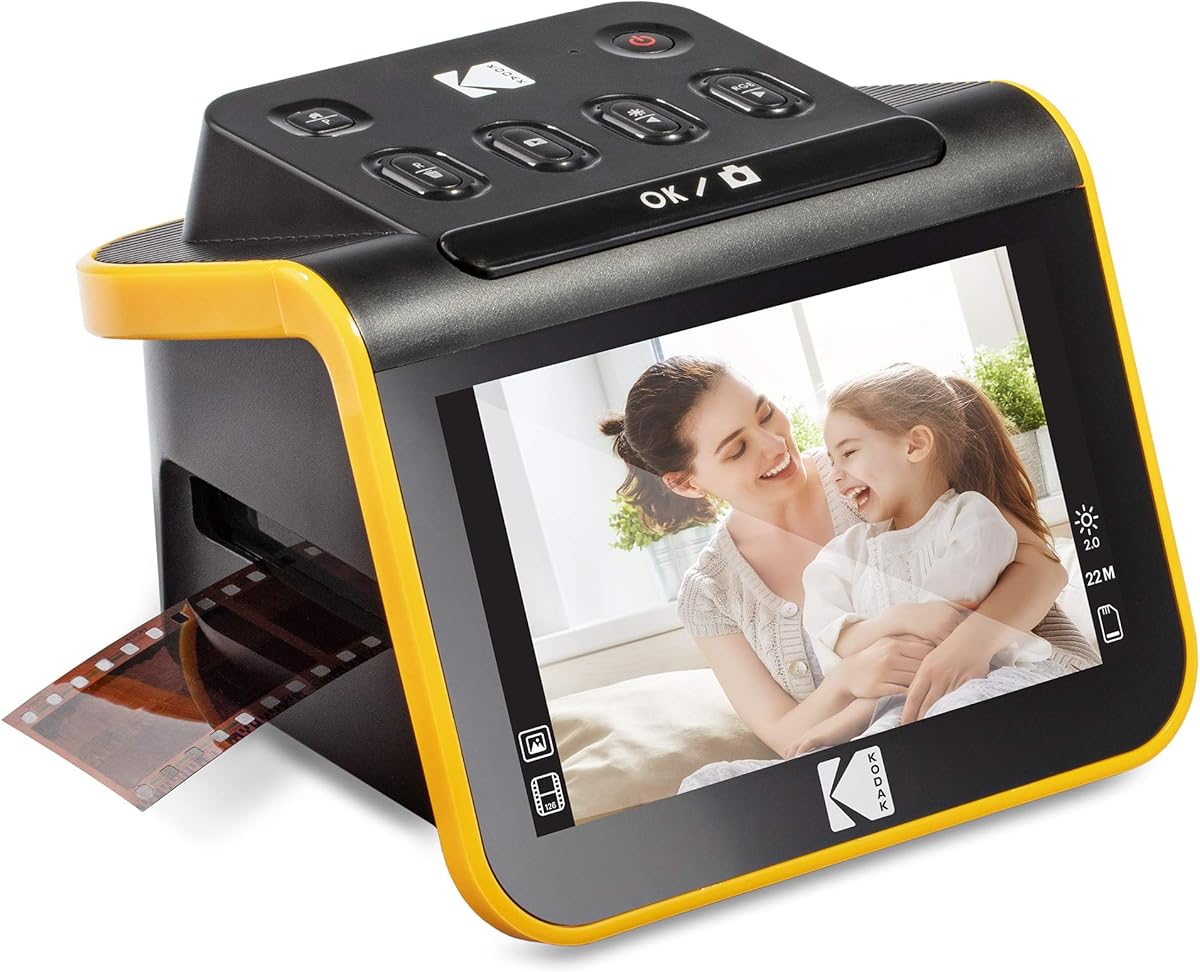
KODAK Slide N Scan Film & Slide Scanner
4.3Editor score
5 inch LCD screen for preview
Handles 135 110 126mm film
No computer needed for basic scans
Digitizing your film collection requires a dedicated scanner capable of handling small formats with precision. A good flatbed scanner for film and slides offers high optical resolution, transparency units, and software tools to restore faded colors and remove dust effectively.
We evaluated ten top models based on resolution, ease of use, software capabilities, and output quality. Our comparison includes dedicated film scanners and versatile flatbeds to help you find the right tool for your workflow and budget constraints.
Each pick highlights key strengths and trade-offs to help you decide quickly. Prices and availability change frequently, so verify current listings before purchasing to ensure you get the best value for your specific scanning needs and project scale.
4.3Editor score

4.4Editor score

4.5Editor score
As an Amazon Associate we earn from qualifying purchases.
The following table provides a side-by-side comparison of all ten scanners to help you quickly identify key specifications like resolution, film support, and connectivity options for your digitization projects.


The KODAK Slide N Scan stands out as a practical budget-friendly solution for those looking to digitize old slides and negatives without investing in expensive flatbed hardware. Rated 4.3 stars by users, it delivers a standalone experience that eliminates the need for a computer during the scanning process.
We may earn a commission when you buy through this link, at no additional cost to you.
Its standout quality is the 5 inch LCD screen which allows you to preview and edit scans directly on the device. The easy-load film inserts support 135 110 and 126mm formats plus 50mm slides making it versatile for mixed collections. The Quick-Feeding tray technology ensures continuous loading so you can scan multiple images in a single session.
Trade-offs include lower optical resolution compared to professional flatbed scanners and basic editing features that lack advanced restoration tools. These limitations are acceptable for casual users prioritizing convenience and speed over archival-quality outputs. The device also supports SD cards up to 32GB for portable storage.
This scanner is ideal for hobbyists and families wanting to quickly convert old photo memories into digital files. If you need a simple plug-and-play device to preserve negatives without technical complexity the KODAK Slide N Scan is a strong recommendation for your needs.
You can scan and save images directly to an SD card without connecting to a computer which saves time and setup effort.
The included adapters handle multiple film formats including 135 110 126mm and slides ensuring you can digitize varied collections easily.
We may earn a commission when you buy through this link, at no additional cost to you.
The Epson Perfection V800 Photo Scanner delivers extraordinary scans with 6400 dpi resolution making it a powerful tool for detailed film digitization. With a 4.0 Dmax it captures smooth gradations and fine shadow details essential for preserving the depth of original negatives.
We may earn a commission when you buy through this link, at no additional cost to you.
Its exclusive Dual Lens System automatically selects the optimal lens for the specific media size ensuring consistent sharpness across slides and prints. The scanner supports Windows and Mac operating systems providing flexibility for diverse user environments. Users report reliable performance when scanning both color and grayscale films with excellent color fidelity.
While it lacks some standalone features found in simpler units the V800 excels in output quality. The warmup time and reliance on external software may be minor hurdles for quick tasks but are acceptable given the high resolution results. It is a solid choice for home photo archivists.
Buyers seeking professional-level resolution without the cost of top-tier models will find this scanner valuable. It balances performance and versatility effectively making it a worthy addition to any serious scanning setup focused on preserving film memories.
The 6400 dpi resolution ensures fine grain detail is captured accurately enabling large enlargements without visible pixelation or loss of clarity.
Switching lenses automatically for different media sizes maintains optical precision and avoids distortion on various film formats and print sizes.
We may earn a commission when you buy through this link, at no additional cost to you.
The Epson Perfection V850 Pro Photo Scanner earns its Editor's Choice badge by delivering unparalleled scans with 6400 dpi resolution and advanced Digital ICE technology. Its 4.0 Dmax ensures smooth gradations and fine shadow detail making it ideal for restoring faded or damaged film.
We may earn a commission when you buy through this link, at no additional cost to you.
The exclusive dual lens system selects from two lenses for optimum results on different media types. This versatility combined with robust color accuracy makes it a favorite among professionals and enthusiasts. The included software bundle provides tools for color restoration and dust removal streamlining the workflow.
While the price is higher than standard models the build quality and output fidelity justify the investment. Users note that the initial setup and software calibration require time but yield exceptional long-term results. The scanner is compatible with Windows and Mac platforms.
For those who prioritize image quality and restoration capabilities the V850 Pro is the top pick. It stands out as a reliable workhorse for digitizing valuable film collections with precision and minimal manual intervention during the editing phase.
Digital ICE automatically removes dust and scratches from film scans saving hours of manual retouching in post-processing software for clean final images.
Pro quality color reproduction ensures tones match the original film closely preserving the artist vision and historical authenticity of each shot.
We may earn a commission when you buy through this link, at no additional cost to you.
The Epson Perfection V550 Color Photo Scanner offers sharp vivid reproductions with 6400 dpi resolution and built-in transparency unit capabilities. It supports scanning 35mm slides negatives and film making it a versatile option for mixed media workflows at a reasonable price.
We may earn a commission when you buy through this link, at no additional cost to you.
Key strengths include ReadyScan LED technology which ensures fast scanning without warmup times saving valuable minutes per task. Digital ICE technology removes dust and scratches automatically enhancing restoration workflows. Auto edge detection crops each image separately improving productivity for batch scanning sessions.
Users find the auto edge detection useful for separating multiple photos but note OCR software is limited compared to full professional suites. The scanner is well suited for home offices needing document and photo digitization without sacrificing image quality. It supports 48-bit color depth for true to life colors.
If you need a balanced scanner that handles documents and film efficiently the V550 is a solid choice. It provides robust restoration tools and fast performance making it a practical tool for everyday digitization tasks and small batch archival projects.
ReadyScan LED allows immediate scanning without preheating so you can start digitizing photos instantly after opening the software interface.
Multiple photos scanned together are automatically cropped and saved as separate files streamlining batch processing without manual cutting.
We may earn a commission when you buy through this link, at no additional cost to you.
The Epson Perfection V600 Photo Scanner delivers high resolution scans with 6400 dpi enabling enlargements up to 17×22 inches. It features a built-in transparency unit that allows scanning of 35mm slides negatives and medium format film up to 6x22cm.
We may earn a commission when you buy through this link, at no additional cost to you.
Its strengths lie in the ability to handle larger media without external adapters and the energy-efficient LED technology that avoids warmup delays. The comprehensive software includes DIGITAL ICE for dust removal and Easy Photo Fix for restoring faded images helping users get clean digital files.
Some users report basic software limitations that may require third party tools for advanced editing. Connectivity via USB 2.0 is standard and reliable though not the fastest available today. Overall it offers great value for those needing large format digital enlargements.
For hobbyists aiming to print large wall art from old film the V600 is a capable tool. It balances resolution and usability making it a good choice for home archivists looking to expand print sizes while preserving original detail quality.
The high resolution and large scanning area allow for big print enlargements without losing quality enabling creative displays at home.
LED technology uses less power and requires no warmup making it eco friendly and ready for immediate use whenever needed.
We may earn a commission when you buy through this link, at no additional cost to you.
The Epson Perfection V700 Photo Color Scanner reproduces photographs with professional quality thanks to its 6400 dpi resolution and 4.0 Dmax density. It can scan slides negatives and medium format film making it a versatile choice for diverse image preservation needs.
We may earn a commission when you buy through this link, at no additional cost to you.
The innovative dual lens system automatically selects two lenses for desired resolution ensuring sharp details across all media types. Users appreciate the precision it offers compared to single lens alternatives. The scanner integrates well with both Windows and Mac systems.
While it lacks extensive built-in restoration features compared to higher models it still delivers reliable raw image quality. Setup requires connecting to a computer and installing drivers which may slow initial use. It is a straightforward tool for focused scanning tasks.
Buyers seeking a reliable scanner for medium format film will find the V700 effective. It balances resolution and media flexibility providing consistent results for home archivists and photographers needing to digitize slides and negatives efficiently.
Automatic lens selection maintains optical sharpness across different media sizes ensuring every scan is as crisp as possible.
Scanning medium format film expands your options for archiving larger negatives without needing a separate dedicated medium format scanner.
We may earn a commission when you buy through this link, at no additional cost to you.
The Epson Perfection 4870 PRO Scanner sets a professional standard with 4800 dpi optical resolution and 48-bit color depth. It includes a built-in transparency adapter and the powerful LaserSoft SilverFast Ai 6.0 software bundle for advanced control and restoration.
We may earn a commission when you buy through this link, at no additional cost to you.
Its strengths include exceptional color accuracy and the ability to capture fine detail due to high bit depth. The transparency adapter supports 4 film holders making batch scanning easier. Connectivity via USB and Firewire ensures compatibility with various workstation setups.
The high price and use of Firewire which is less common today are considerations. However for those needing professional quality the value is clear. The included software provides features found only in paid packages on other scanners.
This scanner is best for professional labs or serious collectors needing precise color management. If you require top tier output and control over every scan parameter the 4870 PRO delivers the reliability and fidelity expected in studio environments.
SilverFast Ai software included provides advanced tools for color correction dust removal and dynamic range optimization to maximize scan quality.
48-bit color depth captures more tonal values ensuring smooth gradients and accurate color representation essential for archival preservation.
We may earn a commission when you buy through this link, at no additional cost to you.
The Epson Expression 12000XL-PH Flatbed Scanner offers professional large-format scanning accommodating reflective media up to 12.2×17.2 inches plus slides and negatives. It features a 2400 dpi resolution and Color II imaging system for bold vibrant scans.
We may earn a commission when you buy through this link, at no additional cost to you.
Key features include One-touch color restoration that restores faded photos and negatives automatically. The transparency unit handles up to 48 frames of 35mm negatives making it suitable for high volume workflows. Micro Step drive technology ensures precision across the large scanning surface.
While resolution is lower than some flatbeds the large format capability is unique. Users may find the software interface complex. The scanner is ideal for graphic arts professionals who need to scan large documents alongside film strips efficiently.
If you regularly work with oversized originals alongside film this scanner fills a niche gap. Its restoration tools and large bed size provide a practical solution for hybrid scanning projects in professional print and design workflows.
The large scanning bed accommodates oversized documents and prints enabling a single device to handle both photo film and larger media.
One-touch restoration uses advanced algorithms to recover faded colors quickly saving time on manual editing in external software.
We may earn a commission when you buy through this link, at no additional cost to you.
The Epson Perfection V550 Photo Color Scanner delivers 6400 dpi optical resolution with 48-bit color depth ensuring detailed color scans. It is Energy Star compliant and uses standard USB connectivity making it easy to integrate into most setups.
We may earn a commission when you buy through this link, at no additional cost to you.
Its strengths include consistent optical resolution and energy efficiency. It supports basic photo restoration and document scanning needs. The device performs reliably for routine digitization tasks without requiring advanced driver configurations.
Some users report basic software that limits advanced editing and restoration workflows. Connectivity and setup are straightforward but lack the polish of newer models. It remains a solid option for those prioritizing hardware specs over software features.
For users who manage their own editing separately this scanner provides the raw quality needed. It is a dependable tool for archiving photos and documents where basic scanning speed and resolution matter more than bundled software tools.
Energy Star compliance ensures low power consumption which reduces electricity costs and heat output during prolonged scanning sessions.
48-bit color captures subtle nuances in film tones ensuring smooth transitions and accurate reproduction of original color palettes.
We may earn a commission when you buy through this link, at no additional cost to you.
The Epson Expression 10000XL Wide-Format Graphic Arts Scanner provides A3 sized scanning for originals up to 12.2×17.2 inches with 2400 dpi resolution. It offers 48-bit color depth ensuring accurate color reproduction for professional graphic arts and photo workflows.
We may earn a commission when you buy through this link, at no additional cost to you.
Its strengths include wide-format capability that accommodates large prints and documents alongside slides. Connectivity via USB and Firewire ensures flexibility for older systems. The scanner supports 50 to 200 zoom for precise viewing and editing.
Users note the resolution is lower than dedicated film scanners and may need advanced cleaning before use. Despite this it remains a useful tool for mixed media environments where large format is essential. The color depth supports professional editing needs.
For businesses handling both documents and film this scanner offers a balanced solution. It fills the niche for large originals where standard flatbeds fall short ensuring all media types can be digitized in one place.
A3 size capacity allows scanning large art and documents without requiring multiple passes or separate specialized machines for big originals.
Zoom capability from 50 to 200 percent helps inspect fine details during scanning ensuring accuracy and proper alignment before saving.
We may earn a commission when you buy through this link, at no additional cost to you.
Selecting the right scanner depends on your film formats resolution needs and budget. This guide outlines critical factors to ensure you choose a device that meets your archiving requirements.
Optical resolution determines the level of detail captured from film. Aim for at least 3200 dpi for good enlargements and 4800 to 6400 dpi for archival quality. Interpolated resolution is less important than true optical resolution for film scanning.
Prioritize optical resolution to ensure fine grain and texture details are preserved without artificial smoothing or loss of quality.
A built-in transparency unit is essential for scanning slides and negatives. It provides uniform backlighting necessary for transparent media. Without it you would need to purchase external adapters which may not be compatible or reliable.
Ensure the scanner has a dedicated transparency unit to avoid extra costs and ensure consistent results for all film types.
Check which film formats the scanner supports such as 35mm 110 126mm or medium format. Some models include multiple holders while others are limited to standard 35mm. Verify holders are included before buying to save on extras.
Choose a scanner that covers the specific film sizes in your collection to simplify the scanning workflow and avoid purchasing extra holders.
Digital ICE and similar technologies remove dust and scratches automatically during scanning. This saves significant time compared to manual editing. High-end models often include this feature as a standard capability.
Opt for scanners with digital dust removal to streamline restoration and reduce manual editing work significantly.
Software bundles affect ease of use and output quality. Look for tools that support color restoration editing and batch processing. Some scanners require third party software for advanced features which adds to cost and setup time.
Verify the included software meets your editing needs or plan for additional purchases to unlock full potential.
Connectivity options like USB 2.0 Firewire or Type-C determine how the scanner connects to your computer. Newer systems may lack Firewire so USB is preferred for compatibility. Check driver availability for your operating system before buying.
Choose modern USB connectivity to ensure compatibility with current computers and avoid driver issues on new machines.
Bit depth indicates how many colors and tones the scanner can capture. 48-bit color depth is recommended for film to ensure smooth transitions and rich shadows. Higher bit depth preserves more data for post-processing edits.
Select scanners with at least 48-bit color depth for accurate tone reproduction and editing flexibility.
Prices vary widely from budget dedicated scanners to professional flatbeds. Consider your project scale and frequency of use. A higher initial cost may be justified by better longevity and output quality over time.
Balance your budget against long-term needs to invest wisely in a device that lasts and performs consistently.
Start by cleaning your film and slides with a soft brush or lint-free cloth to remove surface dust before placing them in holders. This simple step ensures the scanner does not lock in debris during the scan process.
Place the film emulsion side down on the transparency unit and align the edges with guides provided in the holders. Avoid touching the image area directly to prevent fingerprints that can degrade scan quality.
After scanning regularly wipe the glass platen and transparency unit with a microfiber cloth to maintain clarity. Update drivers and software to ensure compatibility with operating system updates for smooth performance.
Most flatbed scanners require a computer to control scanning and save files. However standalone units like the KODAK Slide N Scan allow saving to SD cards without a PC. Check model specs for connectivity options before purchasing to suit your workflow.
For high-quality enlargements 4800 dpi to 6400 dpi is recommended. Lower resolutions like 3200 dpi work for web sharing. Higher resolution captures more grain detail but results in larger file sizes and longer scan times.
Some models like the Epson V600 and V700 support medium format film up to 6x22cm. Verify the specific film holders included or sold separately. Not all flatbeds accept medium formats without dedicated adapters.
Digital ICE is an automatic dust and scratch removal technology built into some scanners. It uses infrared light to detect defects and fills them in during scanning saving time on manual editing.
Most scanners include holders for 35mm slides and negatives. Medium format or specialty holders may need separate purchase. Always check what is included in the box before buying to avoid extra costs.
Use a lint-free microfiber cloth lightly dampened with water or glass cleaner to wipe the platen. Dry thoroughly before scanning to prevent streaks. Clean regularly for consistent image quality.
Our top picks highlight the best budget standalone option the versatile professional V850 Pro and the high-end 4870 PRO for studio use. Each serves distinct needs depending on format size restoration requirements and budget constraints.
Prioritize optical resolution transparency unit inclusion and digital dust removal for the best results. Balance these features with software and connectivity compatibility to ensure the scanner fits your computer and editing workflow seamlessly.
Prices and availability change frequently so verify current listings and reviews before purchasing. Investing in the right scanner preserves your film collection with high fidelity for future generations and creative projects.