
EBOOT 30 Pieces Photoresistor
4.6Editor score
Large quantity of resistors
Standard 5mm size
Compatible with 5V systems
This guide compares the top light sensors for Arduino to help you choose the right module for your project needs and budget requirements today.
Light sensors are essential components for any Arduino project that needs to react to environmental changes. Whether you are building an automated lighting system or a weather station, choosing the right sensor ensures accurate data and reliable performance for your build.
We evaluated ten highly rated modules based on accuracy, compatibility, ease of use, and value. Each product was selected for its ability to work seamlessly with popular microcontrollers while providing consistent readings across different lighting conditions.
Each pick includes key specifications, pros, cons, and practical advice to help you decide. Note that stock and pricing may change frequently so always verify current availability before placing your order to ensure a smooth purchasing experience.
4.6Editor score
4.7Editor score
5.0Editor score
The following table provides a side-by-side overview of all ten selected modules. It highlights core specifications to help you quickly identify which sensor fits your project requirements.


The WWZMDiB module combines a classic photoresistor with an LM393 comparator to offer versatile detection capabilities. With a 4.4 rating, it stands out for projects needing both digital switching and analog readings.
We may earn a commission when you buy through this link, at no additional cost to you.
Its clean waveform and strong driving capability make it suitable for directly triggering relays or other high load components. The built-in potentiometer allows you to fine tune the light threshold without extra code.
While it lacks the precision of dedicated digital sensors, the flexibility of dual outputs provides significant value. Users should note that analog readings require calibration due to component variance.
This module is ideal for hobbyists building automated switches or simple environmental monitors. It balances cost and functionality effectively for general purpose Arduino applications.
The module provides both digital and analog pins so you can choose the best interface for your controller logic.
Turn the potentiometer to set the exact brightness level that triggers the digital output signal for your project.
We may earn a commission when you buy through this link, at no additional cost to you.
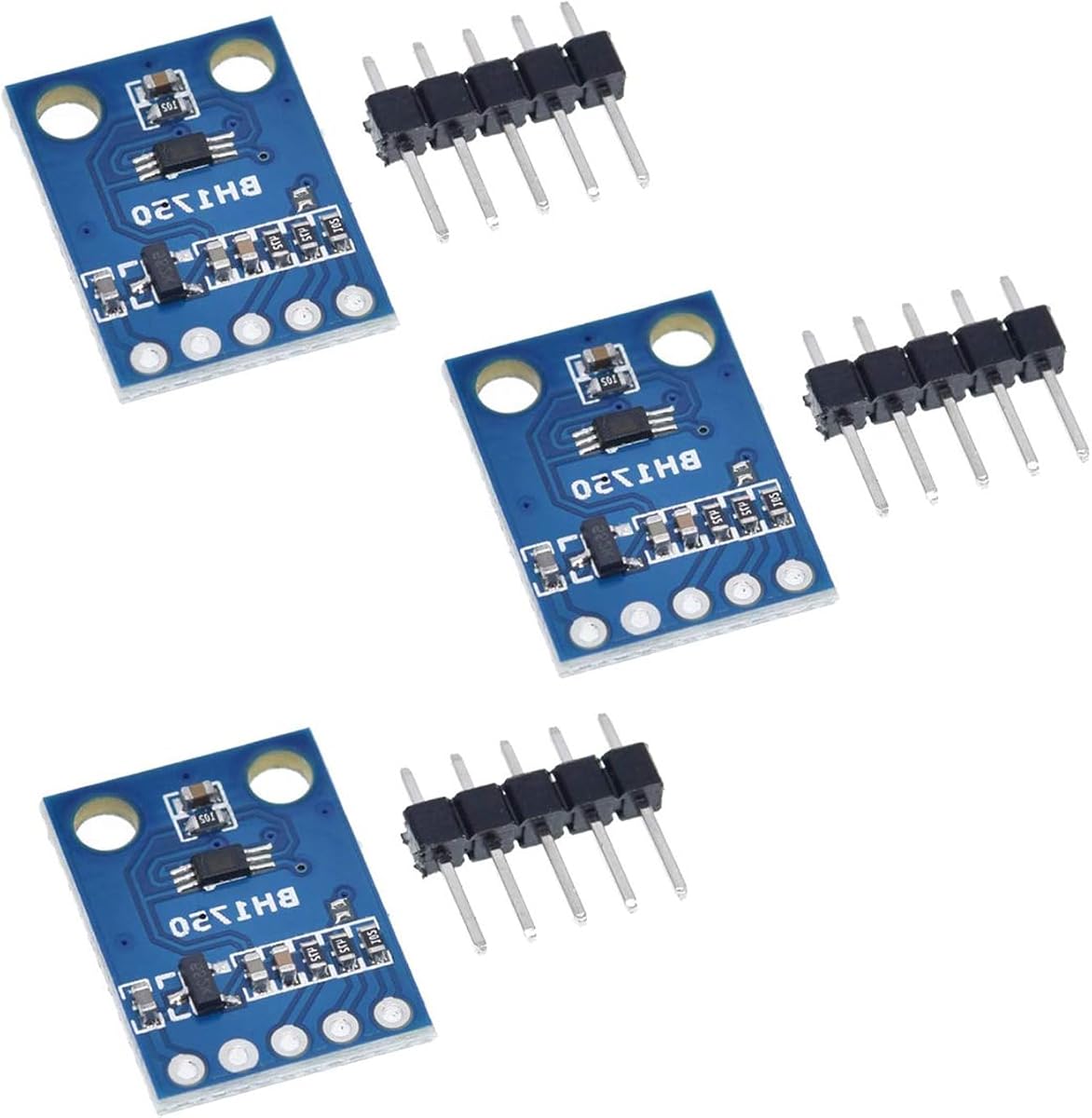
This 3-pack features the GY-302 module which uses the BH1750FVI chip for accurate light intensity measurement. With a 4.7 rating, it is a top choice for projects requiring reliable digital data.
We may earn a commission when you buy through this link, at no additional cost to you.
The compact size allows easy integration into tight enclosures while the I2C interface frees up analog pins on your Arduino. Its high quality chip ensures consistent readings across different environments.
Although it does not offer analog voltage output, the digital precision is often more useful for automated systems. Users should ensure their board supports I2C communication protocols.
Choose this pack when you need multiple sensors or want professional grade accuracy without complex circuitry. It is perfect for weather stations or smart home lighting control.
The BH1750FVI chip provides direct light intensity values that are easy to read and compare across your project.
Its small dimensions make it simple to mount inside cases or on small PCBs without blocking other components.
We may earn a commission when you buy through this link, at no additional cost to you.
The HiLetgo version of the GY-302 is known for using the original BH1750FVI chip which ensures better consistency and reliability. It maintains a 4.5 rating for dependable operation in various conditions.
We may earn a commission when you buy through this link, at no additional cost to you.
Users appreciate the stable readings and the three unit pack which is useful for bulk projects. The module fits standard breadboards and connects easily via two data lines.
While it shares similar specs with other GY-302 modules, the component quality can vary. This specific listing emphasizes the original chip usage for better long term stability.
This sensor is best for developers who prioritize reliability and consistent data over raw cost savings. It suits professional prototypes and durable end products.
Using the original chip helps ensure the sensor meets expected performance standards without signal noise.
Having three modules allows you to test different placements or create multi sensor arrays easily.
We may earn a commission when you buy through this link, at no additional cost to you.
This photodiode module is designed to detect light from a specific direction rather than general ambient levels. With a 4.5 rating, it works well for projects like line followers or light seeking robots.
We may earn a commission when you buy through this link, at no additional cost to you.
The directional nature helps filter out background light which improves accuracy when targeting a specific source. It includes a potentiometer to adjust how sensitive it is to light changes.
Users should ensure the sensor faces the target light source directly for optimal performance. The analog output also allows for fine tuning thresholds via software.
Select this pack if your project requires targeted light detection rather than room lighting awareness. It is a cost effective bulk solution for robotics.
The photodiode focuses on the light source directly in front of it to minimize interference from other angles.
Use the blue potentiometer to set how easily the module triggers on light changes for your specific setup.
We may earn a commission when you buy through this link, at no additional cost to you.
These 30 photoresistors are ideal for users who need raw components to build their own custom circuits. With a 4.6 rating they are praised for their value and standard specifications.
We may earn a commission when you buy through this link, at no additional cost to you.
Each resistor is 5mm and has a known spectral peak which makes them easy to integrate into custom designs. They can be used with simple voltage dividers to create your own sensors.
While they require more work than pre built modules they offer flexibility for custom layouts. Users should ensure they add resistors to limit current when interfacing with Arduino.
This pack is the most budget friendly option for prototyping many projects at once. It is best for makers who enjoy building circuits from scratch.
Build your own custom sensor circuits using these resistors to fit exact spacing or design needs.
With thirty units you can replace failed parts or run multiple experiments without buying more stock soon.
We may earn a commission when you buy through this link, at no additional cost to you.
This pack includes ten modules that use the LM393 comparator for reliable digital switching based on light levels. It holds a 4.6 rating for consistent performance in automated projects.
We may earn a commission when you buy through this link, at no additional cost to you.
The modules are easy to wire with just three pins which simplifies connections to your Arduino. They are capable of directly driving relay modules to control external lights.
The digital output is clean and suitable for counting or triggering events without complex code. However the analog output may need calibration for precise measurements.
Opt for this pack if you need multiple sensors for a distributed lighting system. It offers a great balance of convenience and cost for bulk deployments.
Use the digital output to trigger a relay when light crosses a threshold so external devices turn on.
Just connect power ground and signal to your board and you are ready to test the sensor.
We may earn a commission when you buy through this link, at no additional cost to you.
These modules are marketed for compatibility with Arduino and ESP32 boards making them versatile for IoT projects. They have a 4.6 rating which reflects their ease of use with various microcontrollers.
We may earn a commission when you buy through this link, at no additional cost to you.
The adjustable threshold via potentiometer allows you to set the digital output point without changing code. This makes prototyping faster and more intuitive for beginners.
Tutorials provided for ESP32 and ESP8266 help users get started quickly. The dual output ensures you can use the analog value if you need more detail than a simple switch.
This bundle is excellent for hobbyists who work with different boards and need a common sensor type. It is a solid choice for smart home experiments.
Works seamlessly with popular boards like Arduino and ESP32 so you can switch between projects easily.
Get started faster with provided guides that explain wiring and basic code for supported boards.
We may earn a commission when you buy through this link, at no additional cost to you.
This bulk pack of 50 photoresistors offers a high average rating and excellent value for large scale prototyping. Users rate it highly for its consistent electrical specifications across the lot.
We may earn a commission when you buy through this link, at no additional cost to you.
The resistance values are typical for GL5516 sensors so they work well with standard voltage divider circuits. They are suitable for automation projects where many sensors are needed.
Because these are bare components you will need to build the supporting circuit on a breadboard or PCB. This flexibility is a pro for custom designs but a con for quick tests.
Ideal for educators or manufacturers who need dozens of sensors for classrooms or production. The price point makes it affordable to order in large quantities.
With fifty units you have enough for multiple projects or classrooms without worrying about running out soon.
The 4.9 average rating suggests users are very satisfied with the quality and consistency of the parts.
We may earn a commission when you buy through this link, at no additional cost to you.
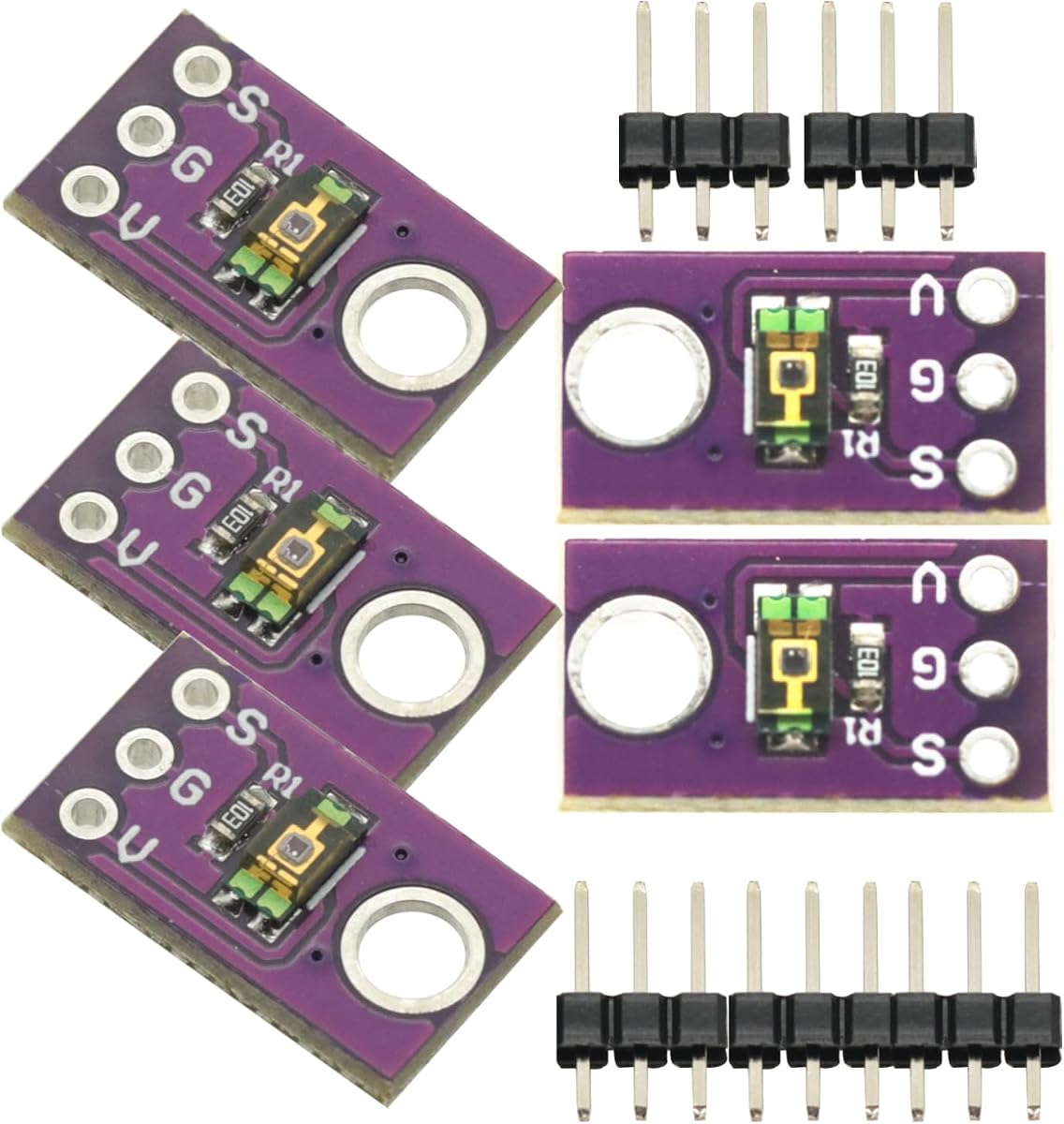
The TEMT6000 is designed specifically for ambient light sensing in devices like displays. It holds a perfect 5.0 rating for its professional grade performance and reliability.
We may earn a commission when you buy through this link, at no additional cost to you.
This sensor excels at detecting light levels suitable for dimming screens or controlling industrial lighting. Its design ensures that readings reflect what a human eye would perceive.
While it costs more than generic resistors it offers a refined experience for commercial or high end hobby projects. It is a plug and play solution for precise ambient detection.
Choose this if you need accurate light management for displays or complex systems. It is worth the investment for projects requiring consistent professional quality.
Perfect for automatically adjusting screen brightness based on the environment to save power and improve comfort.
The module is built to withstand industrial environments where precise lighting control is critical for safety.
We may earn a commission when you buy through this link, at no additional cost to you.
This module uses the popular LM393 comparator to provide a stable and reliable light detection experience. It has a 4.6 rating for its consistent performance in various applications.
We may earn a commission when you buy through this link, at no additional cost to you.
It is suitable for smart cars and general purpose projects where detecting light presence is key. The dual output allows you to choose between a simple switch or a detailed value.
The design is straightforward which makes it easy to integrate into existing systems without extra calibration. It is a safe choice for beginners needing a ready to use sensor.
If you want a reliable module without advanced features this is a good standard option. It works well for basic light monitoring and control tasks.
The LM393 chip ensures your signal output does not fluctuate due to small light changes or noise.
Widely used in automotive projects to control lights or alert drivers when conditions change.
We may earn a commission when you buy through this link, at no additional cost to you.
Selecting the right light sensor requires understanding how it measures light and what interfaces it offers. This guide breaks down the key factors to help you choose wisely.
There are two main types of light sensors for Arduino projects. Photoresistors are basic components that change resistance with light levels. They are cheap but require external components to work. Modules like the GY-302 come with circuitry built in for easier use.
Choose a module if you want quick results. Choose a raw resistor if you need to build a custom circuit.
The interface determines how data is sent to your board. Digital outputs switch on or off at a threshold. Analog outputs provide a voltage level proportional to light intensity. Some modules offer both for flexibility.
Use digital for simple switches and analog for precise measurements.
Some sensors use I2C which uses only two wires. This is great for saving pins. Others use direct voltage output. Check your board pin availability before selecting a sensor type.
Pick I2C if you have many sensors or few free pins.
Most sensors work with 3.3V or 5V. However some older modules might have specific requirements. Ensure your sensor voltage matches your microcontroller to prevent damage.
Check the power supply range listed in the product specs.
Some sensors detect light from all directions while others focus on a specific angle. This matters if you need to detect a specific light source.
Select directional sensors for line following projects.
Consider what you are building. Industrial lighting needs different sensors than a simple night light. Professional ambient sensors offer better accuracy for displays.
Match the sensor to your final application requirements.
Buying in bulk saves money for larger projects. However ensure the quality matches the price. Cheap components might have variance.
Balance your budget with the required sensor precision.
First you must connect the sensor to your board correctly. Always check the pinout diagram. Connect VCC to power and GND to ground. If using analog pin to an analog input.
Second you will need code to read the data. Use the analogRead function for analog pins or digitalRead for digital. The library for I2C sensors is usually available online.
Finally protect your sensor from physical damage. Do not touch the sensitive surface. Clean it gently with a soft cloth if it gets dusty.
A light sensor is often just the raw component like a photoresistor. A module includes this component along with supporting circuits like comparators. Modules are easier to use because they have output pins.
It depends on the specific sensor. Many modern modules support both 3.3V and 5V. Always check the voltage range in the product description to be safe.
For dimming you need precise ambient light detection. Modules like the TEMT6000 are designed specifically for display backlight dimming applications.
Calibration involves testing the sensor in known light conditions. Record the analog values in dark and light and map them to your software thresholds accordingly.
Yes most of these modules support 3.3V which is the logic level of ESP32. They work seamlessly without level shifters.
Photoresistors are cheaper and easier to use. Photodiodes are faster and more precise. Choose based on your speed requirements.
We have reviewed ten of the best light sensors available today. From simple resistors to professional modules each option serves a different need.
Prioritize ease of use if you are new to electronics. If you need precision look for modules with digital output chips.
Always check current availability and stock before buying. We hope this guide helps you find the perfect sensor for your project.