
Mcbazel 3 in 1 Handheld Digital Anemometer
4.5Editor score
Measures wind speed and temperature
Beaufort scale included
Backlight for low light
Discover the top marine anemometers for sailors and boaters. This guide compares ten reliable models for wind speed, direction, and durability on the water.
Navigating open waters requires precise wind data to ensure safety and performance. A marine anemometer provides critical readings for wind speed and direction that help you adjust sails and routes effectively. Choosing the right device ensures you get accurate information even in harsh sea conditions.
We evaluated ten top-rated models based on accuracy, durability, and ease of use for maritime environments. Our comparison includes handheld units for casual sailors and integrated systems for serious racers. Each product was reviewed for its ability to withstand saltwater exposure and deliver consistent data.
This guide highlights the best options available for various boating needs and budgets. You will find detailed insights into features that matter most on the water. Please note that product availability and pricing may change so always verify details before purchasing.
4.5Editor score

4.5Editor score

4.4Editor score
The following table provides a side-by-side overview of all ten products included in this guide. It highlights key specifications to help you quickly identify the model that fits your specific boating requirements and budget constraints.


The BTMETER BT-100 stands out as a top choice for sailors needing reliable wind data on deck. With a 4.5 rating from users it offers precise measurements essential for safe navigation. Its ability to switch between five different wind units makes it versatile for various maritime regions.
We may earn a commission when you buy through this link, at no additional cost to you.
This device features a sensitive sensor with eight vanes and two temperature sensors for consistent performance. The tripod hole allows for hands free monitoring while you manage sails or steer the boat. It also provides wind chill calculations which are helpful when assessing comfort during long trips.
While the casing is plastic it remains lightweight and durable enough for typical recreational use. The battery life is decent though you will need to replace the included AAA batteries occasionally. Some users might prefer a more rugged metal body for extreme offshore conditions.
Buyers looking for a balance between cost and performance will appreciate this model. It suits both casual weekend sailors and professionals who need quick reliable wind checks. We recommend it as a primary handheld tool for any marine toolkit.
The ability to switch between knots mph and other units ensures compatibility with international navigation charts and preferences.
The built in tripod mount lets you secure the device for continuous readings without holding it in hand.
We may earn a commission when you buy through this link, at no additional cost to you.
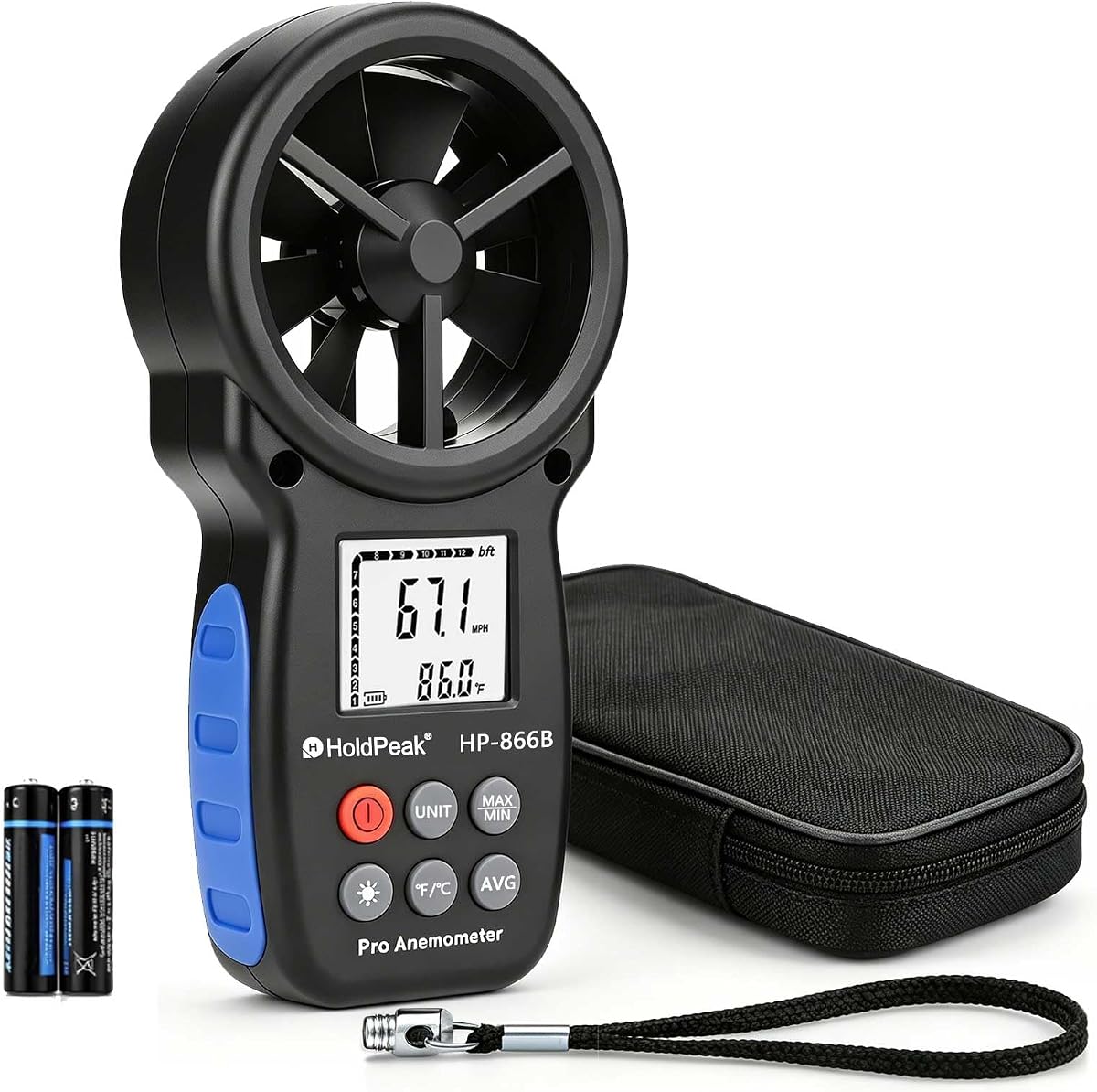
The HoldPeak 866B delivers excellent value for sailors seeking a dependable handheld wind meter without breaking the bank. It shares similar high accuracy features with more expensive models making it a smart choice for budget conscious buyers. The dual temperature sensors ensure precise readings in varying sea air conditions.
We may earn a commission when you buy through this link, at no additional cost to you.
Its design includes a hand strap and waterproof carrying pouch which are critical for protecting the device during wet voyages. The Max Min and Average functions allow you to track wind gusts and consistent speeds over time. This data is invaluable for planning sail adjustments or anchoring strategies.
Though it is slightly heavier due to its robust build it feels solid in hand. The auto off feature helps preserve battery life during storage periods. Some users may find the screen less bright than premium options but the backlight usually compensates.
We recommend this unit for those starting their sailing journey or needing a spare backup meter. Its durability and included accessories make it ready for immediate use. It is an ideal pick for day sailors and fishing enthusiasts.
The Max Min and Average wind speed functions help you analyze trends rather than just instantaneous readings.
The waterproof carrying pouch ensures the device stays safe from moisture and salt spray when not in use.
We may earn a commission when you buy through this link, at no additional cost to you.
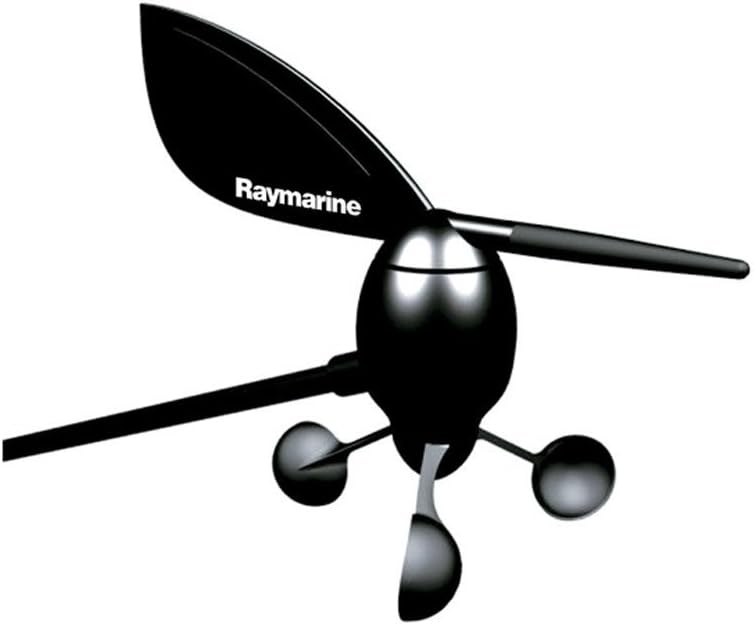
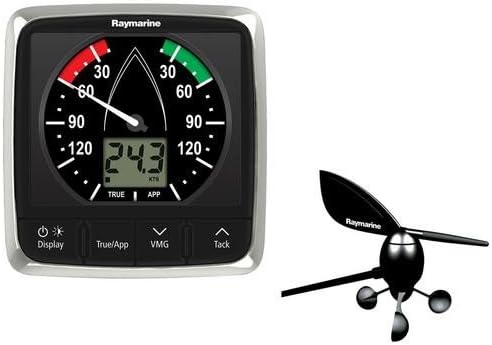
The Raymarine i60 Wind System offers a complete solution for serious sailors who need continuous wind data. It combines a durable masthead transducer with an easy to read display unit. This system is designed to withstand harsh marine environments and provide consistent performance year round.
We may earn a commission when you buy through this link, at no additional cost to you.
The analog dial with red backlighting ensures visibility even in low light conditions during night watches. It displays wind speed direction Beaufort scale and VMG to help optimize sail trim. The low power consumption is a key benefit for extended trips where battery saving is crucial.
Installation requires routing a 30 meter cable which can be time consuming but is manageable for most boat setups. The upfront cost is significantly higher than handheld models but it is more reliable for permanent integration. It lacks the portability of handheld units but excels in accuracy.
This system is best for racing sailors or live aboard cruisers who prioritize detailed data. The brand reputation for durability gives confidence in long term operation. We suggest this for those ready to invest in a professional marine instrument.
Beyond basic speed it provides VMG and Tack information essential for competitive racing and efficient sailing.
The red backlight preserves night vision while allowing you to read critical wind data on the helm.
We may earn a commission when you buy through this link, at no additional cost to you.
The Magnetic Mount Anemometer by Inspeed offers a unique solution for those who need to measure wind while moving. Its calibrated accuracy ensures you get reliable data whether on a boat or in a vehicle. The strong magnetic base allows for quick attachment to metal surfaces.
We may earn a commission when you buy through this link, at no additional cost to you.
Its compact design makes it easy to store when not in use. The device provides fast readings which is helpful for dynamic sailing conditions. It is a great alternative for those who prefer mounting over holding a handheld unit.
However it may not be ideal for traditional deck use where a tripod is preferred. The data storage is limited so you cannot track long term trends without external tools. The high accuracy is a key benefit for precise calibration needs.
We recommend this for users who need a versatile tool for multiple environments. It works well for sailors who also use it on trailers or vehicles. It is a solid pick for calibration and quick checks.
The magnetic base allows you to secure the device quickly to metal surfaces without tools.
Factory calibration ensures that the readings are accurate right out of the box for consistent use.
We may earn a commission when you buy through this link, at no additional cost to you.
This display unit is designed for existing Raymarine i60 systems that need a screen replacement. It maintains the original interface and functionality ensuring compatibility with your current masthead transducer. The black and grey finish matches older marine instrumentation aesthetics perfectly.
We may earn a commission when you buy through this link, at no additional cost to you.
It serves as a reliable solution for sailors who have a working sensor but a failed display. The compact size fits standard instrument panels without requiring major modifications. It is a specialized product for specific hardware needs.
Users must already have a compatible transducer to use this item which limits its standalone value. The lack of a sensor means you cannot use it for new setups without additional purchases. It is purely a repair component for existing fleets.
We recommend this for boat owners repairing an outdated Raymarine setup. It offers a cost effective way to restore functionality without replacing the whole system. It is essential for maintaining legacy marine electronics.
This display is engineered to work seamlessly with existing i60 masthead transducers without extra adapters.
The black and grey finish matches the classic look of older marine instrument panels for a clean upgrade.
We may earn a commission when you buy through this link, at no additional cost to you.
The TopTes TS-301 features a notably large 2.26 inch LCD screen that is easy to read even in bright sunlight. It includes humidity readings which can be useful for assessing overall weather comfort while on the water. The device supports six different units for flexible usage across regions.
We may earn a commission when you buy through this link, at no additional cost to you.
Its auto shut off feature helps conserve battery life which is important for devices often stored for long periods. The backlight ensures you can check data at dusk or dawn without straining your eyes. It is lightweight and fits easily into a pocket or small bag.
The humidity sensor may take time to adjust to new environments so readings may lag slightly. The screen size while beneficial can also make the unit more prone to accidental damage if dropped. Handle it with care during rough sea conditions.
We suggest this for sailors who prioritize readability and additional weather data. It is a practical choice for coastal cruising where humidity impacts comfort. It stands out for its user friendly interface.
The large screen size ensures that wind data is clear even for those with reduced eyesight in bright conditions.
Automatic shutdown after non use helps preserve battery life and ensures the device is ready when needed.
We may earn a commission when you buy through this link, at no additional cost to you.
This kit provides essential replacement parts for older Raymarine instruments like the ST50 ST60 and ST80 models. It includes the anemometer bowl vane counterweight and fixing screws to restore full functionality. This is an economical way to extend the life of existing marine electronics.
We may earn a commission when you buy through this link, at no additional cost to you.
The components are designed to match the original specifications ensuring accuracy and reliability after replacement. You will need to perform the installation yourself which may require basic tools and mechanical aptitude. It is a vital part for boats with legacy systems.
While effective for repairs it does not offer new technology upgrades for the display unit. The compatibility is limited to older generations which may not suit newer fleets. However for legacy maintenance it is a highly recommended part.
We recommend this for boat owners maintaining Raymarine ST series instruments. It allows you to keep older systems running without replacing the entire network. It is a key component for legacy marine maintenance.
This part fits specifically with ST50 ST60 and ST80 instruments ensuring a correct fit for legacy setups.
The package includes all screws weights and cups needed to complete the replacement without extra purchases.
We may earn a commission when you buy through this link, at no additional cost to you.
This masthead transducer is the latest version designed for seamless integration with modern marine wind systems. It includes the vane and cups necessary to capture wind speed and direction accurately. It serves as a critical component for vessels using compatible onboard displays.
We may earn a commission when you buy through this link, at no additional cost to you.
The build quality is robust to withstand the rigors of the mast environment including salt and wind. It offers reliable data transmission when paired with the right display unit. The latest version ensures improved performance over older sensor models.
Installation requires running cables down the mast which can be complex for DIYers. It is more expensive than handheld units but offers permanent reliable data. It is best for sailors seeking integrated system reliability.
We suggest this for those upgrading or repairing existing marine systems. It ensures your data is accurate without needing new handheld tools. It is a solid investment for serious boaters.
The latest version incorporates improvements that offer better accuracy and resistance to marine conditions.
Includes all necessary vanes and cups so you can install a complete sensor solution immediately.
We may earn a commission when you buy through this link, at no additional cost to you.
This system offers a complete wind monitoring solution with both the masthead transducer and display included. It provides both apparent and true wind data which is essential for advanced sailing techniques. The adjustable backlight ensures visibility day and night on the helm.
We may earn a commission when you buy through this link, at no additional cost to you.
The controls are designed to be intuitive making it easy to navigate settings and data fields. It is built to withstand harsh marine conditions ensuring long term reliability. The turnkey nature saves time compared to sourcing parts separately.
Installation can be complex and may require professional help for proper cabling and calibration. It is a significant investment compared to handheld alternatives. It is best for those seeking a permanent high end solution.
We recommend this for serious cruisers or racers needing detailed data. It simplifies the setup process with all parts included. It is a high performance choice for serious sailors.
Displaying both wind types allows for precise sail trim and navigation adjustments for maximum efficiency.
The adjustable backlight feature lets you customize the display brightness to suit day or night use.
We may earn a commission when you buy through this link, at no additional cost to you.
The Mcbazel 3-in-1 is a highly affordable handheld unit that covers essential needs for casual sailors. It measures wind speed temperature and includes the Beaufort scale for easy wind classification. Its compact size makes it easy to store in any pocket or small kit.
We may earn a commission when you buy through this link, at no additional cost to you.
The backlight ensures you can read the display even in low light conditions at dusk. It is a versatile tool for various outdoor activities beyond sailing such as fishing or camping. The simplicity makes it user friendly for all ages.
Build quality is basic so handle with care to avoid damage from impacts. It does not have a tripod mount for continuous monitoring which limits advanced usage. However for quick checks it offers great value.
We suggest this for weekend sailors or those on a tight budget. It provides all the basic data needed for safe recreational boating. It is a practical entry level choice for marine data.
The inclusion of the Beaufort scale helps you quickly interpret wind force for safety and sail selection.
Its compact design ensures you can carry it anywhere without adding bulk to your sailing gear.
We may earn a commission when you buy through this link, at no additional cost to you.
Selecting the right marine anemometer involves weighing several critical factors to ensure safety and performance on the water.
Accuracy is paramount when sailing because incorrect wind data can lead to dangerous decisions. Look for devices with multiple vanes and temperature sensors to ensure precise readings. Higher quality sensors reduce errors caused by environmental interference or mechanical friction.
Always choose models with proven accuracy ratings and regular calibration options for reliable performance.
Marine environments are harsh with salt spray and humidity causing rapid corrosion. Your anemometer must have a design that resists moisture and salt buildup over time. Look for products explicitly marketed for marine use rather than general HVAC tools.
Prioritize units with sealed components and corrosion resistant materials for long term reliability.
The display must be easy to read under bright sunlight or in dark conditions during night watches. Large screens with high contrast and backlighting are essential for quick data checks. Some models offer analog dials which some prefer for rapid estimation without digital lag.
Ensure the screen size and lighting suit your vision needs and typical sailing hours.
Decide whether you need a handheld device for flexible use or a fixed system for continuous monitoring. Handheld units are great for small boats while fixed systems provide constant data on larger vessels. Consider the installation effort required for masthead transducers before committing to integrated systems.
Choose a form factor that matches your vessel size and your typical sailing routine.
Different regions use different units such as knots mph or meters per second so flexibility is useful. Additional features like wind chill humidity or Beaufort scale enhance your understanding of conditions. Ensure the device supports the units required for your specific navigation needs.
Look for units that allow easy switching between measurement standards for global usability.
Battery life is crucial for long trips where access to charging is limited. Some models use standard AAA batteries which are easy to replace anywhere while others may be rechargeable. Low power consumption modes help extend usage time significantly.
Opt for devices with long battery life and easy access to replacement power sources.
If you need hands free operation consider units that come with tripod holes or magnetic mounts. This allows you to secure the device while managing sails or steering the vessel. Permanent systems require masthead mounting which must be done securely.
Evaluate the mounting hardware included with the device to ensure it fits your deck setup.
Prices vary significantly from budget handhelds to premium integrated systems so set a realistic budget. Higher cost often brings better durability and accuracy but a basic unit may suffice for recreational use. Check warranty terms to ensure protection against defects or corrosion.
Balance the initial cost with expected longevity to get the best value for your needs.
Before sailing calibrate your anemometer according to the manufacturer instructions to ensure accurate readings. For handheld units hold the device level and allow it to adjust to ambient conditions. For masthead systems ensure the transducer is securely mounted and free of debris.
Rinse your device with fresh water after every use to remove salt and prevent corrosion. Dry the unit thoroughly before storing it in a protective case to avoid moisture damage. Regular cleaning extends the life of the sensors and keeps readings consistent.
Accuracy is critical because incorrect wind readings can lead to improper sail trimming or dangerous navigation decisions. Inaccurate data may cause you to underestimate sudden gusts or shifts in wind direction. Reliable instruments help you react quickly to changing weather for safety.
Apparent wind is what you feel on the boat combining wind speed with the boat's movement. True wind is the actual wind speed and direction independent of your boat's motion. Both metrics are vital for sail trim and strategic navigation decisions.
You should rinse the device with fresh water after every use to prevent salt buildup. Salt crystals can corrode the moving parts and affect accuracy over time. A quick wipe down and dry ensures long term reliability in marine environments.
Yes handheld anemometers are perfect for small boats or checking wind before docking. They offer flexibility and portability that fixed systems lack for casual users. Many sailors carry one as a backup for quick checks on deck.
The Beaufort scale categorizes wind force from calm to hurricane levels for easy understanding. It helps sailors visualize wind strength without interpreting raw speed numbers. This feature is useful for quick safety assessments while on the water.
Yes regular calibration ensures the device remains accurate over time especially if used frequently. Some models have self calibration features while others require manual adjustment. Always refer to the user manual for specific calibration steps.
We hope this guide helps you find the perfect marine anemometer for your sailing needs. Whether you prefer a portable handheld or a fixed system there are reliable options for every budget. Our top picks offer a balance of accuracy durability and ease of use.
Prioritize units that offer accuracy and salt resistance to ensure they last in marine conditions. Consider how you will use the device whether for casual cruising or competitive racing to choose the right features.
Remember to check current prices and availability before making a purchase. The market changes quickly so verifying details ensures you get the best value for your investment.