
1/2" Flow Hall Sensor with NPT
4.7Editor score
1-30L/min range
NPT thread compatibility
Integrated magnetic hall
Arduino flow meters are essential components for projects requiring precise liquid measurement. These devices convert fluid movement into digital signals that microcontrollers can easily interpret and display.
We compared ten popular models based on flow range, build quality, ease of integration, and user feedback. Each entry offers unique strengths for different application scenarios.
Every pick highlights key specifications and ideal use cases. Note that prices and availability fluctuate regularly, so verify current details before finalizing your purchase decision.
4.7Editor score

5.0Editor score

5.0Editor score
As an Amazon Associate we earn from qualifying purchases.
This table provides a side-by-side overview of all ten selected Arduino flow meter models. Review the specs to identify the right fit for your specific project requirements.


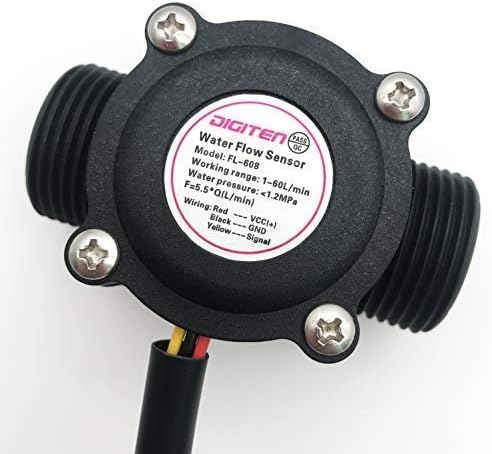
The DIGITEN G1.5" Water Flow Sensor is our top pick for users needing broad capacity. With a 5 to 150 liter per minute range it handles most industrial and domestic tasks easily.
We may earn a commission when you buy through this link, at no additional cost to you.
Its hall effect sensor delivers precise square wave signals ideal for Arduino. The ROHS compliant materials ensure safety for potable water applications while the G1.5 inch thread fits standard plumbing.
The only trade-offs are its physical size and price compared to smaller options. For large tanks or main line monitoring these factors are negligible compared to its reliability and accuracy.
Buy this if you need a dependable sensor for high flow systems. It is ideal for home automation water usage tracking or commercial beverage dispensing.
The 5-150L/min range supports everything from garden irrigation to industrial cooling loops without sacrificing precision.
All materials meet ROHS standards making it safe for use in reverse osmosis filters and drinking water systems.
We may earn a commission when you buy through this link, at no additional cost to you.
This compact sensor offers excellent value for basic flow monitoring. Its 1 to 30 liter per minute range suits typical household appliances like coffee machines or water heaters.
We may earn a commission when you buy through this link, at no additional cost to you.
The NPT thread simplifies plumbing connections while the sealed hall effect sensor keeps electronics safe. It outputs a pulse per revolution for easy counting via Arduino interrupts.
Users must ensure correct flow direction installation or no signal occurs. For small scale projects this minor constraint is outweighed by the cost savings and simplicity.
Choose this for entry level IoT water tracking or prototyping. It works well for beverage machines campus card equipment and low flow filtration.
The light outline and NPT thread make setup quick without specialized tools or complicated fittings.
The integrated sensor is sealed from the water pipe keeping it dry and protected from moisture damage.
We may earn a commission when you buy through this link, at no additional cost to you.
The Taidacent YF-S201 is engineered for water heaters and dispensers. Its Hall effect rotor assembly provides consistent pulse signals that controllers use to regulate flow accurately.
We may earn a commission when you buy through this link, at no additional cost to you.
With multiple connection points it offers flexibility for different setups. The plastic valve body is lightweight yet robust enough for continuous monitoring of inlet flow rates.
While priced slightly higher than budget options the reliability and specialized design justify the cost. It ensures stable operation in high cycle environments like hot water systems.
Ideal for anyone building automated heating or beverage solutions. This sensor ensures the controller gets accurate real time data for optimal performance.
The magnetic rotor rotates with flow rate changes allowing the controller to determine magnitude for precise regulation.
Installed at the water inlet end this sensor detects influent flow for efficient water heater management.
We may earn a commission when you buy through this link, at no additional cost to you.
This DEVMO model features a notably high signal amplitude above 4.6V ensuring clear pulses for Arduino. It is primarily aimed at water testing and cooling system monitoring.
We may earn a commission when you buy through this link, at no additional cost to you.
With a robust electrical strength rating it withstands industrial conditions well. The flow range suits credit card machines vending equipment and general fluid measurement tasks.
Users might find it less generic than standard home models. Yet its performance in specific high signal environments makes it a compelling choice for technical projects.
Select this for cooling loops or testing devices needing reliable thresholds. It delivers consistent control switch performance for complex automation.
The high amplitude output ensures the signal stays clean even in electrically noisy environments.
Rated for 1250V/min electric strength it offers durability for demanding industrial cooling or testing setups.
We may earn a commission when you buy through this link, at no additional cost to you.
This sensor uses food grade plastic making it safe for drinkable water lines. It supports a wide voltage range from 5 to 24V giving flexibility for various Arduino boards.
We may earn a commission when you buy through this link, at no additional cost to you.
The G1/2 BSPT thread fits common plumbing. Raw materials conform to ROHS standards reducing environmental impact. Its flow range matches typical coffee machines and purifiers.
Though it has a lower rating than premium picks it remains functional for budget builds. Users must ensure clean water to prevent debris from jamming the rotor.
Use this for beverage dispensers or purifiers on a budget. It is a solid choice for projects prioritizing material safety over high precision.
Made from food grade plastic it meets ROHS standards ensuring it is safe for potable water contact.
Operating from 5 to 24V it works with many power supplies and controller voltage levels.
We may earn a commission when you buy through this link, at no additional cost to you.
The transparent body lets you see the rotor and water flow in real time. This is useful for debugging projects or ensuring no blockages exist in the line.
We may earn a commission when you buy through this link, at no additional cost to you.
Stainless steel beads in the impeller provide wear resistance. The voltage range starts low at 3.5V for battery projects and goes to 24V for mains.
It is sold in a 2 pack offering value. But user feedback suggests reliability can vary. Use it for educational demos or temporary setups.
Choose this when visual verification matters most. It suits card readers and dispensers where seeing the flow helps confirm operation.
The transparent valve body allows direct observation of the rotor and water flow conditions.
Internal impeller beads are made of stainless steel improving wear resistance against debris.
We may earn a commission when you buy through this link, at no additional cost to you.
This sensor uses a 1/4 inch connector for hosepipe with 5 to 7mm inner diameters. It supports very low flows from 0.5 to 3L per minute.
We may earn a commission when you buy through this link, at no additional cost to you.
The food grade plastic ensures safety for drinking water. Its small size fits compact spaces like small aquariums or micro irrigation setups.
Pressure tolerance is lower than larger units so avoid high pressure mains. For precise trickle flow monitoring it remains a handy tool.
Buy this for small scale water dispensers or fountains. It excels where space is tight and low flow accuracy is needed.
Its tiny footprint allows easy installation in small equipment like drink dispensers or fountains.
Connects to a hosepipe with an inner diameter of about 5 to 7mm for flexible tubing.
We may earn a commission when you buy through this link, at no additional cost to you.
The built-in 1.2 meter cable reduces wiring needs for remote sensing. It connects via an SM2.54 3P standard plug for clean connections to Arduino headers.
We may earn a commission when you buy through this link, at no additional cost to you.
This model matches the G1/2 inch thread and 1 to 30L range of the standard DIGITEN unit. The cable allows placing the sensor away from tight electrical boxes.
Users should match the connector type. The signal waveform remains a square wave pulse. For setups where the sensor is distant from the board this adds convenience.
Select this for distributed monitoring systems. It keeps the controller wiring tidy while maintaining accurate flow data.
The 1.2 meter cable lets you place the sensor remotely without needing external wire extensions.
Uses an SM2.54 3P connector for reliable connections to many development boards.
We may earn a commission when you buy through this link, at no additional cost to you.
This variant uses a G3/8 inch thread for smaller plumbing pipes. It handles flows from 0.3 to 10L per minute making it suitable for low flow lines.
We may earn a commission when you buy through this link, at no additional cost to you.
The hall effect sensor outputs a square wave signal. Voltage starts at 3.5V which is great for battery powered Arduino projects. The small size keeps installation simple.
It is less common than the G1/2 size so check fittings. But it fills a niche for fine tubing setups.
Buy this for low flow water purifiers or beverage machines. It ensures precise monitoring where space and flow are limited.
Operating from 3.5V it supports battery powered setups that need low power consumption.
Delivers a clean square wave pulse signal that is easy for Arduino to read and count.
We may earn a commission when you buy through this link, at no additional cost to you.
This model supports up to 60L/min flow with a G3/4 inch thread. It includes a 1.2 meter cable for convenient placement away from the controller.
We may earn a commission when you buy through this link, at no additional cost to you.
The larger thread fits bigger pipes while the 1.75 Mpa pressure rating handles standard home water pressure. The hall effect sensor delivers consistent square wave pulses.
User ratings suggest mixed performance reliability. Ensure proper thread tape sealing for NPT adapters. It is best for main line metering needs.
Choose this for high capacity water tracking systems. It bridges the gap between household sensors and industrial requirements.
The 1 to 60L/min range supports main line water supply monitoring and larger plumbing pipes.
With a 1.75 Mpa pressure tolerance it withstands standard water pressure in residential systems.
We may earn a commission when you buy through this link, at no additional cost to you.
Selecting the right flow meter requires matching specs to your project needs. Review these factors to ensure compatibility and long term reliability.
The flow range determines how much liquid the sensor can measure accurately. Check the minimum and maximum liters per minute to ensure it covers your expected usage.
Choose a sensor that operates within its rated limits to avoid inaccurate readings or physical damage to the rotor.
Most sensors use G1/2 inch BSPT threads while others use G1/4 or G3/4. Match the thread to your plumbing or hosepipe for a leak free seal.
Always use thread seal tape when adapting to NPT fittings to prevent leaks in pressurized lines.
Voltage ranges vary from 3.5V to 24V depending on the model. Ensure your power supply matches the sensor to ensure stable operation.
Lower voltage options like 3.5V are ideal for battery powered projects while 24V models offer higher industrial tolerance.
Sensors have a maximum pressure rating such as 1.75 Mpa. Exceeding this limit can crack the valve body or damage internal components.
Verify your water line pressure matches the sensor specification to ensure safe long term operation.
For drinking water systems ensure the materials meet ROHS or food grade standards. This prevents leaching of harmful substances into the water.
Prioritize sensors that explicitly state potable water compatibility for health critical applications.
Models with built-in cables reduce wiring complexity. Check the length and connector type like SM2.54 for compatibility with your board.
If the cable is too short plan for extensions or select a model with extra length from the start.
Hall effect sensors output a pulse or square wave signal. This format is easy to read using Arduino interrupts for accurate counting.
Ensure the signal amplitude is high enough to avoid noise interference in electrically noisy environments.
Consider where you will install the sensor. Some units suit water heaters while others fit coffee machines or reverse osmosis filters.
Pick a sensor designed for your specific equipment type to optimize performance and reliability.
Install the sensor with the flow direction arrow pointing correctly. Installing it backwards will prevent any signal output and render it useless.
Use thread seal tape on BSPT threads when connecting to NPT pipes. This ensures a watertight seal and prevents leaks at the joint.
Flush the system before connecting the sensor to remove debris. Foreign particles can jam the rotor and reduce accuracy over time.
Most models are designed for water. While they might work with low viscosity fluids oil can damage the bearings. Use sensors specifically rated for other fluids.
Calibration involves measuring known volumes and adjusting the pulse count in code. Most sensors have a factory calibrated factor. Just count pulses and divide by the factor.
Top models reach up to 150 liters per minute. However typical household sensors stop at 30L/min. Choose a sensor based on your system's maximum expected flow.
Yes most DIGITEN models use ROHS compliant materials. Ensure the product states it is for potable water. Avoid generic unmarked sensors for drinking water.
Sensors with built-in cables need minimal wiring. Others use wires that you must connect to Arduino. Always match the voltage and ground pins correctly.
Reverse installation blocks the rotor or creates no signal. Always align the arrow with the water flow direction to ensure accurate pulse output.
The DIGITEN G1.5" sensor leads our list for high volume precision. For budget builds the 1/2" NPT sensor offers excellent value and simplicity.
Prioritize flow range and pressure limits to match your plumbing. Verify material safety if you are measuring drinking water for safety.
Prices and stock change frequently. Double check the current specs on the product page before finalizing your purchase to ensure it meets your needs.